

SIP Trunking Pricing Explained: What You’re Really Paying For
Your business phone bill doesn’t have to be a mystery. SIP trunking pricing typically ranges from $15 to $25 per channel monthly for unlimited plans, with metered options starting around a penny per minute for lower-volume callers.
- Channel-based unlimited plans offer predictable monthly costs and include domestic long-distance calling, making them ideal for businesses with steady call volumes.
- Metered pay-per-minute plans charge only for actual usage, benefiting organizations with lighter or seasonal communication needs.
- Hidden fees like E911 charges, porting costs, and regulatory surcharges can inflate your total bill if you don’t review contracts carefully.
For businesses ready to cut telecom expenses while gaining modern features, understanding these pricing structures is the first step toward smarter communication spending.
Understanding what you’re actually paying for when evaluating SIP trunking separates businesses that overspend from those that optimize their communication budgets. The VoIP services market continues to expand, driven by organizations seeking cost-effective alternatives to traditional phone infrastructure. The global VoIP market was valued at $176.16 billion in 2025 and is projected to reach $388.97 billion by 2034, growing at a CAGR of 10.4%. This growth reflects businesses of all sizes recognizing that internet-based calling delivers substantial savings without sacrificing reliability.
Yet navigating SIP trunking pricing remains challenging for many decision-makers. Providers structure their offerings differently, terminology varies, and the line items on quotes can seem deliberately confusing. This guide breaks down exactly what determines your monthly bill, how different pricing models work, and what questions to ask before signing any agreement.
How Does SIP Trunking Pricing Work?
Before comparing providers or calculating costs, understanding the fundamental components of SIP trunking pricing prevents confusion and ensures accurate budgeting. Two terms appear repeatedly in every conversation about VoIP pricing, and conflating them leads to costly mistakes.
What Is the Difference Between a SIP Trunk and a SIP Channel?
A SIP trunk functions as the virtual connection between your phone system and the public telephone network. It’s the main highway connecting your business to the outside world. Most small and medium businesses need only one SIP trunk, regardless of how many employees use the phone system.
SIP channels are individual lanes on that highway. Each channel supports one concurrent call, whether inbound or outbound. A business with ten employees who might have five simultaneous conversations needs five channels, not five trunks. Understanding this distinction matters because providers price channels differently than trunks, and purchasing unnecessary trunks wastes money.
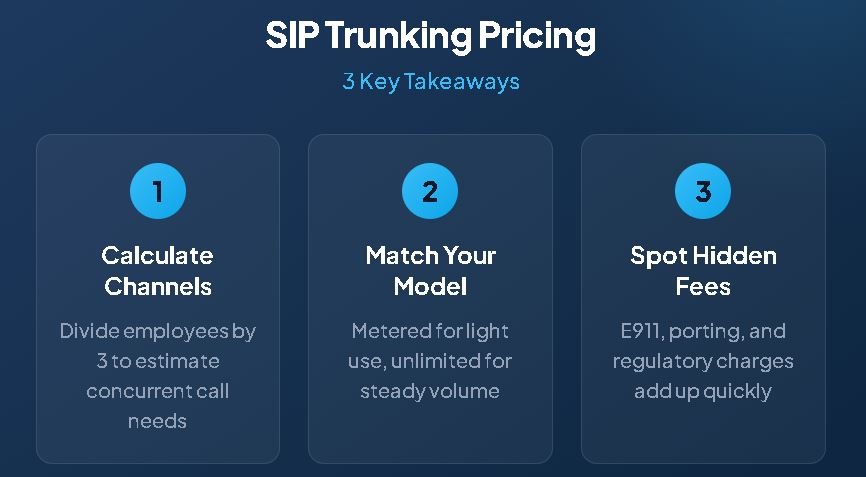
The relationship between employees and channels follows a general formula: divide your total phone-using employees by three to estimate concurrent channel needs. A 30-person office typically requires around 10 channels, though call-heavy departments like sales or customer service may need additional capacity during peak periods.
Why Does Concurrent Call Capacity Determine Your Costs?
Traditional phone systems forced businesses to purchase fixed capacity in expensive blocks. Primary Rate Interface lines delivered 23 voice channels regardless of actual usage, meaning companies paid for idle capacity month after month.
SIP channel cost structures offer superior flexibility. Businesses purchase exactly the concurrent call capacity they need and adjust that number as requirements change. During slow seasons, reduce channels and lower expenses. When growth demands additional capacity, add channels instantly without hardware installations or technician visits. This pay-for-what-you-use approach is one of the primary benefits of SIP trunking that attracts cost-conscious organizations.
What Are the Main SIP Trunk Pricing Models?
Providers structure their services using distinct pricing approaches, each suited to different usage patterns and budget preferences. Selecting the wrong model relative to your calling behavior leads to either unexpected bills or paying for unused capacity.
How Do Metered SIP Trunking Plans Work?
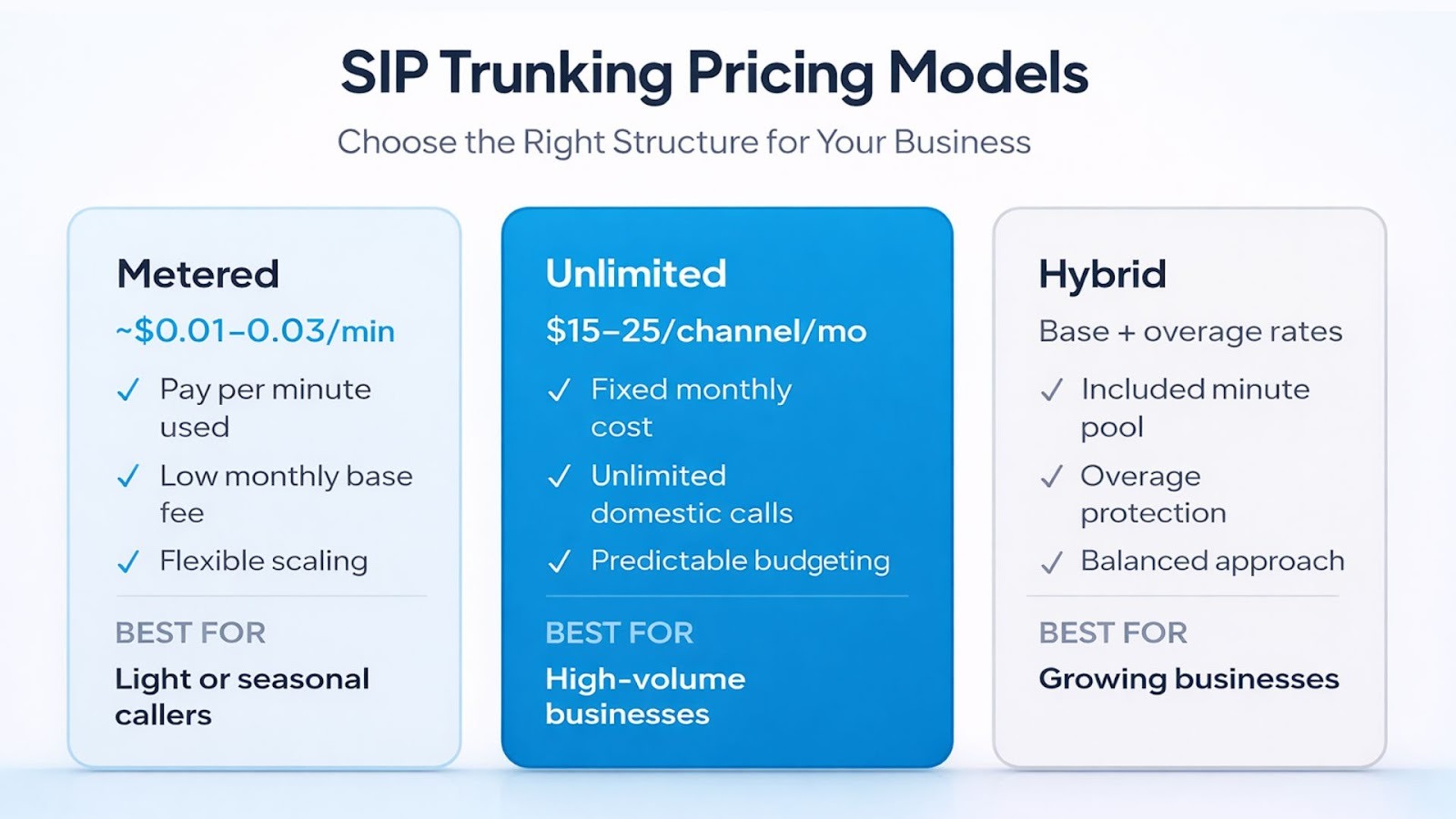
Metered plans charge per minute of actual calling, typically ranging from under a cent to a few cents for domestic calls. A low monthly connection fee provides access to the service, with usage billed incrementally based on call duration and destination.
This model suits businesses with unpredictable or light call volumes. Seasonal operations, companies with primarily email-based communication, or organizations testing SIP trunking before full commitment often find metered plans economical. The risk lies in busy periods, when per-minute charges accumulate quickly and can exceed what unlimited plans would cost.
What Do Unmetered or Unlimited SIP Trunk Plans Include?
Unmetered plans charge a fixed monthly rate per channel, typically between $15 and $25, with unlimited domestic calling included. These plans provide predictable budgeting because monthly expenses remain constant regardless of call volume.
Organizations with consistent, high-volume calling benefit most from unlimited structures. Sales teams making dozens of daily prospecting calls, customer service departments handling continuous inbound inquiries, and businesses with distributed employees who communicate frequently all realize value from flat-rate pricing. The key consideration involves ensuring channel counts align with actual concurrent call needs, avoiding payment for unused capacity.
When Does Hybrid Pricing Make Sense?
Some providers offer hybrid models combining elements of both approaches. A base number of included minutes, paired with per-minute overage rates, attempts to balance predictability with flexibility. Alternatively, bundled packages might include specific channel counts with allocated minute pools at reduced rates.
Hybrid structures work for businesses experiencing growth or those uncertain about future calling patterns. The bundled approach provides some cost protection during busy periods while avoiding the full commitment of unlimited channels. Carefully review how overages are calculated and at what rates, as these charges can accumulate during unexpected volume spikes.
What Factors Affect Business SIP Trunk Rates?
Monthly channel fees are only one component of total VoIP pricing. Several additional factors influence what appears on your invoice, and understanding each helps you accurately compare provider quotes.
How Do DID Numbers Impact Your Monthly Bill?
Direct Inward Dial numbers are the phone numbers your customers call. Each DID typically carries a small monthly fee, often around one to two dollars, plus a one-time setup charge. Businesses needing multiple numbers across different area codes or dedicated lines for specific departments see these costs accumulate.
Enhanced DID services like E911 registration, caller ID name display, and toll-free numbers carry additional charges. E911 in particular involves both monthly fees and regulatory requirements that responsible providers include rather than treat as optional add-ons. Understanding your DID requirements before requesting quotes ensures accurate cost comparisons between providers.
What Features Carry Additional Charges?
Base SIP trunking service includes call connectivity, but advanced capabilities often require supplemental fees. Common add-on charges include business SMS texting, fax services, call recording, and premium support tiers.
Feature bundling varies between providers. Some include comprehensive capabilities in standard pricing, while others charge separately for each enhancement. When comparing business SIP trunk rates, list required features and confirm which are included versus separately priced. A provider advertising lower per-channel rates may cost more overall once necessary features are added.
Does Geographic Coverage Affect Pricing?
Domestic calling coverage within standard pricing varies by provider. Most include calls throughout the contiguous states and often Canada, but Alaska, Hawaii, and territories may incur additional charges. Verify exactly which destinations fall within your plan’s unlimited or base pricing.
Businesses requiring calling outside domestic coverage face per-minute charges that vary by destination. Rates to Western European countries differ from those to developing nations or remote regions. Organizations with regular calling patterns to specific countries should negotiate bundled rates or dedicated routing rather than accepting standard pay-as-you-go pricing.
How Do You Calculate SIP Channel Cost for Your Business?
Estimating your SIP trunking expenses before engaging providers helps set realistic budget expectations and evaluate quotes. Follow these steps to develop a reasonable cost projection.
Step 1: Determine Your Concurrent Call Requirements
Review your current phone system data to identify the peak simultaneous call count. If this information isn’t available, divide the number of employees who regularly use phones by three as a starting estimate. Departments with heavy phone usage, like sales or support, may need ratios closer to one channel per two employees.
Step 2: Select an Appropriate Pricing Model
Analyze your current calling patterns. Businesses averaging more than 1,000 minutes per channel monthly typically benefit from unlimited plans. Lower-volume callers or those with seasonal variations may find metered pricing more economical. Calculate potential costs under both models using historical call data when available.
Step 3: Account for DID Requirements
Count how many phone numbers your business needs, including main lines, department lines, individual extensions with direct numbers, and fax lines. Add setup fees for new numbers and monthly recurring charges to your projection.
Step 4: Include Essential Add-On Features
List required capabilities beyond basic calling. Common needs include E911 services, caller ID name registration, SMS messaging, and fax-to-email. Obtain pricing for each from potential providers and incorporate these into your total cost estimates.
Step 5: Factor Regulatory Fees and Taxes
Federal Universal Service Fund contributions, Telecommunications Relay Service fees, and applicable state and local taxes increase final costs. These charges vary by jurisdiction and provider billing practices. Request sample invoices from potential providers to understand the full regulatory burden.

Sample Cost Estimation for a 20-Employee Business
A typical small business with 20 employees needing around seven concurrent call channels might expect monthly costs structured as follows. Seven unlimited channels at industry-average rates, plus local DID numbers with E911 registration, essential features, and regulatory fees could total between $175 and $300 monthly, depending on the provider and specific requirements. This scenario compares favorably to traditional phone systems that might cost substantially more while offering fewer capabilities.
What Hidden Costs Should You Watch For?
Transparency in SIP trunking pricing varies between providers. Several common charges appear unexpectedly on first invoices or get buried in fine print. Identifying these hidden costs before signing agreements prevents unpleasant surprises.
Setup and activation fees cover initial account configuration. Some providers waive these charges, while others bill $50 to $250 or more. Asking specifically about one-time implementation costs during the sales process ensures clarity.
Number porting fees apply when transferring existing phone numbers from previous providers. Charges typically range from $10 to $25 per number, with potential volume discounts for larger porting projects. Confirm porting costs and timelines before assuming that number retention is straightforward.
Regulatory cost recovery charges cover provider compliance with federal communications requirements. These fees often appear as separate line items rather than being absorbed into base pricing. Understanding how providers handle regulatory recovery prevents invoice confusion.
Equipment and compatibility requirements occasionally generate unexpected expenses. While most business SIP line implementations work with existing phones and systems, older equipment may require adapters or upgrades. Verify compatibility during evaluation to avoid post-purchase equipment expenditures.
Contract terms and cancellation policies deserve careful review. Some providers require minimum commitments or charge early termination fees. Others operate on month-to-month arrangements with simple cancellation procedures. Understanding your flexibility to change providers if the service proves unsatisfactory protects you against being locked into problematic agreements.
How Does SIP Trunking Pricing Compare to Traditional Phone Systems?
The financial case for SIP trunking becomes clearer when comparing total costs against legacy alternatives. Traditional systems impose multiple expense categories that internet-based calling eliminates or substantially reduces.
What Costs Do Businesses Eliminate by Switching?
Per-line rental fees for physical connections disappear entirely with SIP trunking. Traditional systems charge monthly fees for each active line regardless of usage, while SIP channels scale precisely with actual needs.
Long-distance charges that accumulate under traditional pricing structures become non-factors with unlimited domestic plans. Businesses making calls outside their local area often realize immediate savings that alone justify the transition.
Hardware maintenance contracts and equipment replacement costs decline. Traditional phone systems require ongoing service agreements and periodic hardware updates. SIP trunking minimizes on-premise equipment requirements, shifting infrastructure responsibility to the service provider.
Installation and modification expenses change dramatically. Adding lines or extensions to traditional systems often requires technician visits and physical wiring changes. SIP channels activate instantly through online portals with no service appointments or installation delays.
What Savings Can Businesses Realistically Expect?
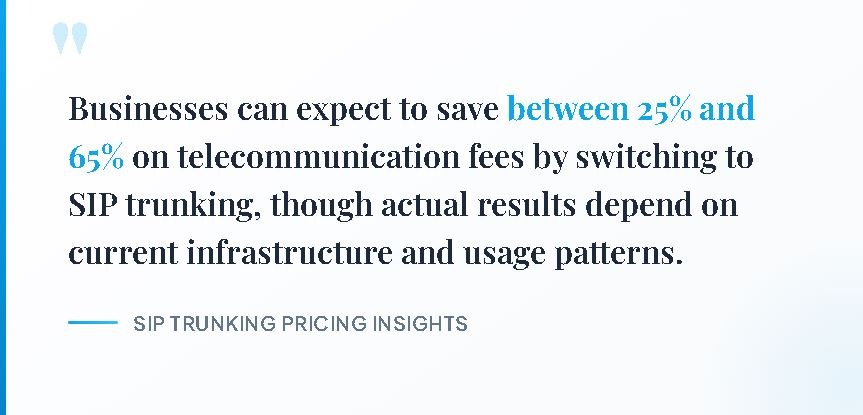
Cost reduction percentages vary based on current spending levels and calling patterns. Businesses can expect to save between 25% and 65% on telecommunication fees by switching to SIP trunking, though actual results depend on current infrastructure and usage patterns.
Beyond direct cost savings, operational efficiencies contribute additional value. Self-service portals eliminate delays waiting for phone company changes. Real-time call data enables better communication management. Integration capabilities with business applications create workflow improvements that traditional systems can’t match.
Frequently Asked Questions
How many SIP channels does a typical small business need?
Most businesses follow a ratio of approximately one channel for every three phone-using employees. A 30-person company typically needs around 10 concurrent call channels. Call-intensive departments like sales or customer service may require additional capacity to handle peak periods without busy signals or call failures.
What is the difference between metered and unmetered SIP trunking?
Metered plans charge per minute of actual calling, making them cost-effective for low-volume or seasonal callers. Unmetered or unlimited plans charge a fixed monthly rate per channel with domestic calling included, benefiting businesses with consistent, high call volumes. Choosing between models depends on your specific calling patterns and budget preferences.
Are there regulatory fees on top of SIP trunking pricing?
Yes, providers pass through Federal Universal Service Fund and Telecommunications Relay Service contributions required by the FCC. These fees appear as separate line items on invoices. Some providers also recover state and local regulatory costs. Request sample billing statements to understand the complete cost structure before committing to service.
How quickly can SIP trunking deliver return on investment?
Most businesses experience ROI within 6 to 12 months, depending on current telecom spending, calling patterns, and implementation complexity. Organizations replacing expensive PRI lines or paying substantial long-distance charges often see immediate monthly savings that accelerate payback timelines. The elimination of hardware maintenance costs provides additional ongoing value beyond direct service fee reductions.
Upgrade Your Communication Without Overpaying
Navigating SIP trunking pricing requires understanding channel structures, comparing pricing models against your usage patterns, and identifying hidden costs before they appear on invoices. Businesses that invest time evaluating their specific requirements and questioning provider quotes make decisions that deliver both immediate savings and long-term value.
SIP.US delivers straightforward, transparent pricing that eliminates the confusion plaguing many provider relationships. With prepaid service, no setup fees, and no long-term contracts, businesses gain enterprise-grade communication capabilities while maintaining complete control over their spending. Get started today and experience SIP trunking designed for organizations that value simplicity as much as savings.

Mitch leads the Sales team at BCM One, overseeing revenue growth through cloud voice services across brands like SIPTRUNK, SIP.US, and Flowroute. With a focus on partner enablement and customer success, he helps businesses identify the right communication solutions within BCM One’s extensive portfolio. Mitch brings years of experience in channel sales and cloud-based telecom to every conversation.
Free SIP Trunk in 60 Seconds
Related Posts

The 5 Best PBX Systems for Your Business in 2026
The business PBX market has transformed, with AI-powered features and cloud deployment becoming standard rather…
Understanding the Different Types of PBX Systems
Choosing the right phone system shapes how your business communicates for years to come. If…

Cost-Effective SIP Trunking for Small Businesses
Discover cost-effective communication solutions for small businesses to boost growth & efficiency. Explore tech tools & strategies for better engagement.