
SIP vs PBX: Which One Works Best for Your Business?

Choosing the right phone system can determine whether your business communicates efficiently or struggles with outdated technology and unnecessary costs. SIP PBX solutions have become the go-to choice for companies seeking flexibility, while traditional PBX systems still serve specific operational needs.
- SIP trunking transforms existing PBX infrastructure by routing calls over the internet, cutting monthly telecom expenses by up to 75% compared to legacy phone lines.
- Traditional PBX systems require significant hardware investment and ongoing maintenance, making them less adaptable to changing business needs.
- Small businesses benefit most from SIP PBX when they need scalability, remote work support, and advanced features without enterprise-level budgets.
Evaluate your call volume, growth plans, and existing infrastructure before deciding which approach aligns with your operational goals.
Business phone systems have transformed over the past decade. The U.S. VoIP services market reached $58.22 billion in 2024 and continues growing as companies modernize their communication infrastructure. This shift reflects changes in how teams collaborate and what customers expect.
Understanding the relationship between SIP and PBX technologies helps decision-makers avoid costly mistakes. These systems can work together or separately, and the right configuration depends on your current equipment and growth projections. This guide covers what each technology offers and which scenarios favor one approach over another.
What Is a SIP PBX System, and How Does It Work?
A SIP PBX system combines two technologies that handle different aspects of business calling. The PBX, or Private Branch Exchange, manages internal call routing, voicemail, auto-attendants, and extension dialing within your organization. SIP, the Session Initiation Protocol, establishes the connection between your phone system and the outside world through internet-based calling.
Traditional PBX systems connected to the public telephone network through copper phone lines or PRI circuits. These physical connections limited flexibility and created ongoing costs based on the number of lines installed. SIP trunking replaces those physical connections with virtual channels that carry voice traffic over your existing internet connection.
How SIP Trunking Enhances PBX Functionality
When you add SIP trunks to a compatible PBX, your system gains capabilities that physical phone lines can’t provide. Calls route dynamically based on availability, time of day, or caller location. The number of simultaneous calls scales up or down without waiting for technician visits or new hardware installation. Your business phone numbers remain portable, meaning you keep them regardless of location changes or provider switches.
The technical process involves your PBX converting voice signals into data packets. These packets travel through your SIP trunk provider’s network to reach the public telephone network. Incoming calls follow the reverse path, arriving at your PBX through the internet rather than dedicated circuits. This architecture explains why SIP PBX configurations deliver cost savings while maintaining call quality.
IP-PBX vs Traditional Hardware
Modern IP-PBX systems operate on computer servers rather than specialized telephone switching equipment. An IP-PBX runs software that manages calling features, stores voicemail recordings, and handles call data records that provide visibility into communication patterns.
Software-based systems receive updates that add features without hardware replacements. Configuration changes happen through web interfaces rather than physical rewiring. Integration with business applications is straightforward because IP-PBX systems speak the same digital language as your CRM and collaboration tools.
How Does Traditional PBX vs SIP Compare?
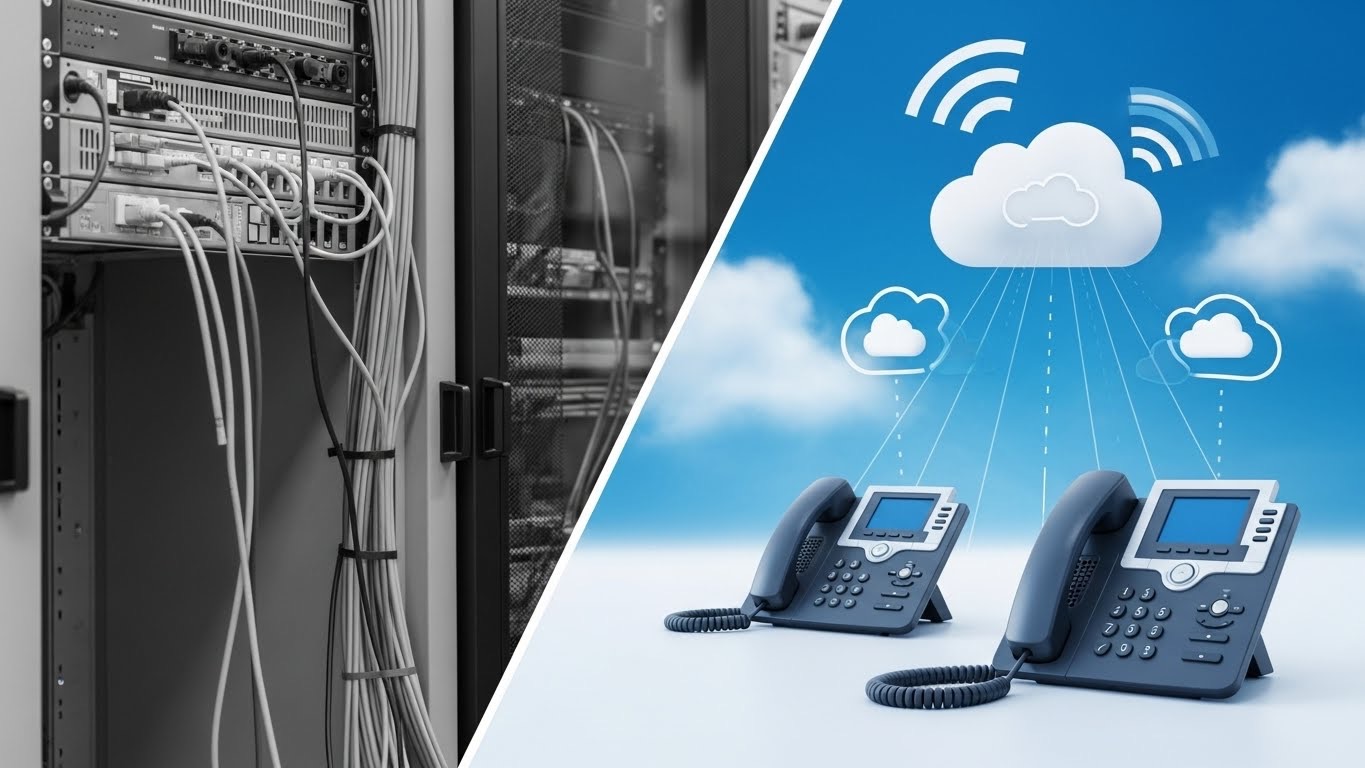
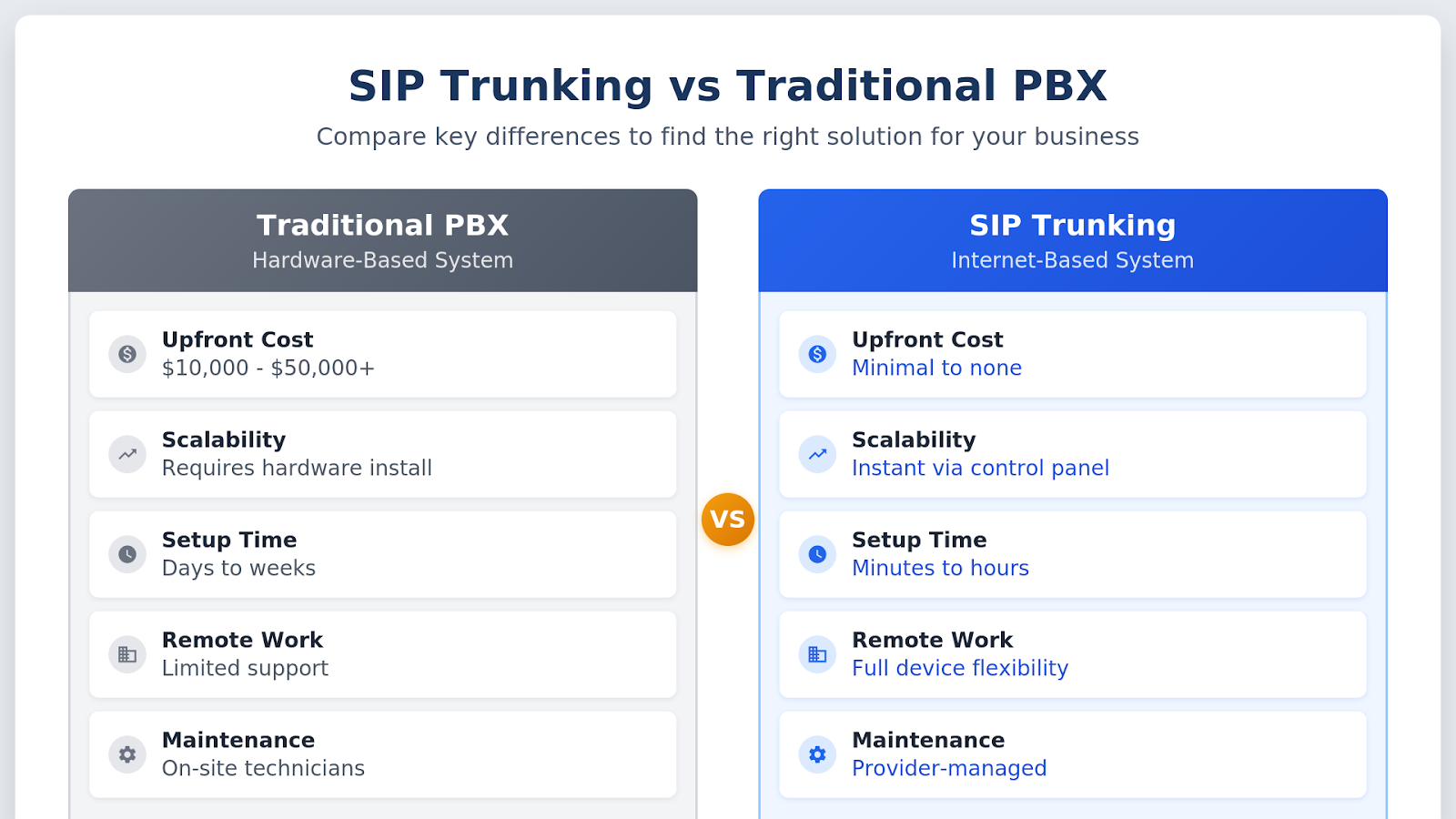
The comparison between traditional PBX vs SIP centers on how calls reach the public telephone network. Traditional setups require dedicated circuits, typically PRI lines that support 23 simultaneous calls per circuit. Each circuit carries fixed monthly costs regardless of actual usage, and adding capacity means installing additional physical infrastructure.
SIP trunking operates on a pay-for-what-you-use model in many configurations or offers unlimited channels at predictable monthly rates. The virtual nature of SIP channels means capacity adjustments happen instantly through control panel changes rather than service calls. Businesses experiencing seasonal fluctuations or rapid growth find this flexibility particularly valuable.
Cost Structure Differences
Traditional PBX expenses include hardware acquisition, installation, ongoing maintenance contracts, and per-line charges from telephone carriers. A mid-sized office might spend $10,000 to $50,000 on initial PBX hardware, plus $500 to $2,000 monthly for telephone service, depending on the number of lines and calling patterns.
SIP PBX configurations shift the cost structure toward operational expenses rather than capital investments. Monthly channel fees replace line rental charges, and the elimination of long-distance fees for domestic calls creates immediate savings.
Reliability and Redundancy Considerations
Traditional phone lines maintained a reputation for reliability because they operated independently of internet connections. Power outages might disable computers while phones continued working on line power from the telephone company.
Modern SIP implementations address reliability concerns through redundant network architectures. Calls route through multiple data centers, automatically failing over if one location experiences problems. Battery backup systems and cellular failover options protect against local outages. The key lies in choosing SIP trunk providers that maintain Tier-1 redundant networks designed for business-critical communications.
Why Are Small Businesses Choosing SIP PBX?
Small business owners face unique pressures when selecting phone systems. Budget constraints limit technology investments, yet professional communication capabilities directly affect customer relationships and competitive positioning. SIP PBX solutions address these competing demands by delivering enterprise features at small business price points.
The following factors explain why growing companies increasingly favor SIP-based approaches:
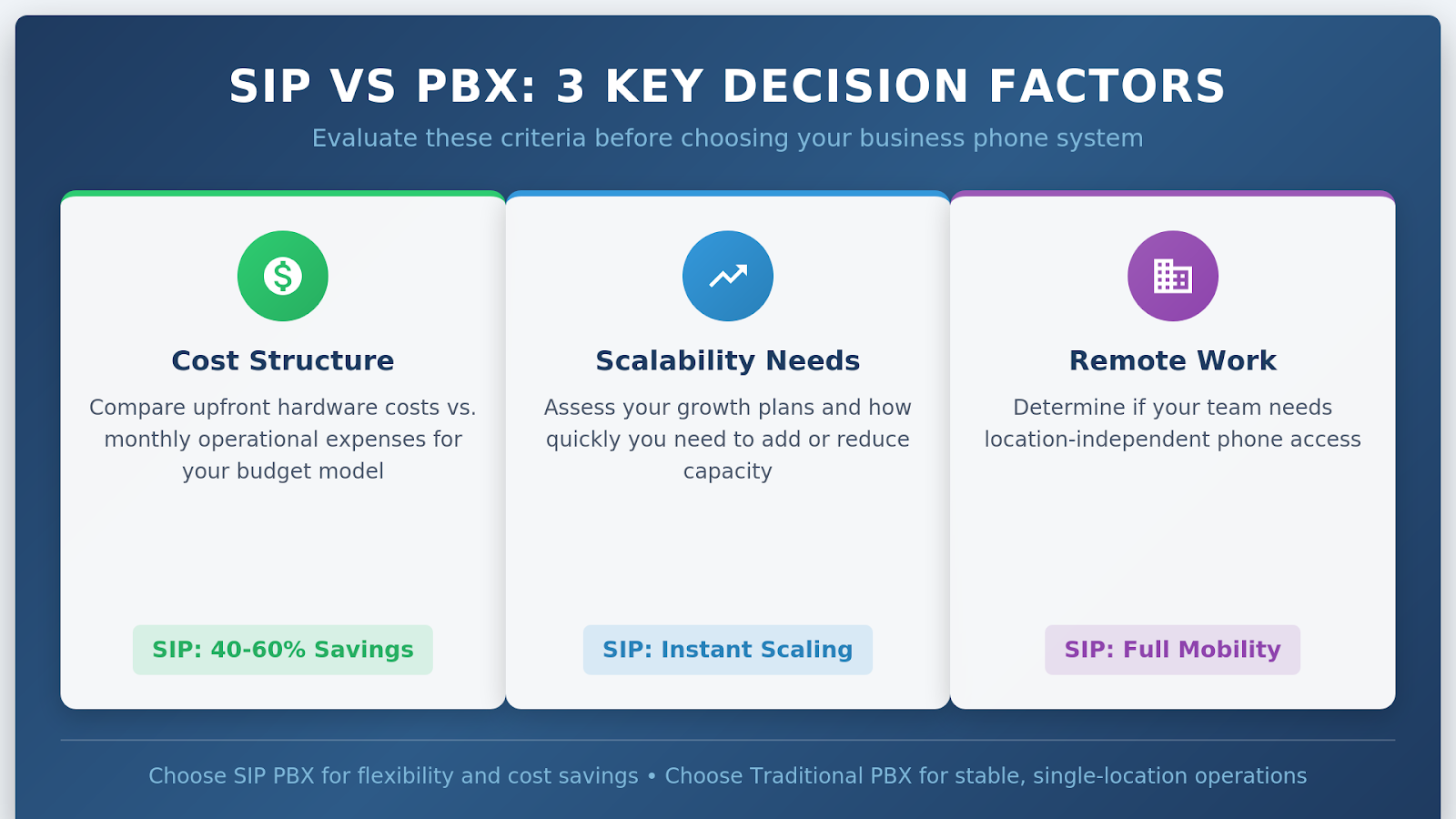
- Reduced upfront investment allows businesses to deploy professional phone systems without large capital expenditures, preserving cash flow for other operational needs.
- Scalability without penalties means adding users, lines, or features as the business grows without overpaying for unused capacity during slower periods.
- Remote work enablement becomes straightforward because SIP-connected systems treat desk phones, softphones, and mobile devices as equivalent endpoints.
- Feature parity with larger competitors gives small teams access to auto-attendants, call routing, voicemail-to-email, and other capabilities previously reserved for enterprise deployments.
- Simplified administration through web-based control panels eliminates the need for specialized telecom expertise or expensive service contracts.

Supporting Distributed Teams
The shift toward remote and hybrid work arrangements caught many businesses with phone systems designed for single-location operations. Traditional PBX systems required employees to be physically present to use their extensions.
SIP PBX configurations treat location as irrelevant. An employee working from home connects to the same phone system as colleagues in the office. Calls to their extension ring on whatever device they prefer. The caller sees consistent behavior regardless of where team members physically work.
Integration Capabilities
Modern business operations depend on software tools that track customer interactions and coordinate activities. Phone systems that operate in isolation create data silos.
SIP PBX systems integrate with popular business applications through standard protocols and APIs. Incoming caller information can populate on screen before agents answer. Call recordings automatically attach to customer records. These integrations compound efficiency gains beyond the direct cost savings of SIP trunking itself.
What Features Should You Look for in SIP Trunk Providers?
Selecting among SIP trunk providers requires evaluating technical capabilities, service quality, and business terms. The lowest per-minute rate rarely indicates the best overall value if reliability issues or missing features create hidden costs through lost productivity and customer frustration.
Network Quality and Coverage
Voice quality depends on the underlying network infrastructure carrying your calls. Premium SIP trunk providers maintain direct connections with major telephone carriers rather than routing calls through chains of intermediaries. These direct relationships provide better call completion rates and clearer audio.
Geographic coverage matters for businesses serving customers across different regions. Providers with broad DID coverage enable local presence in multiple markets without requiring physical offices in each area.
Security and Fraud Protection
VoIP systems face security threats that traditional phone systems avoided. International toll fraud schemes can generate thousands of dollars in charges before detection if systems lack proper protections.
The following security features separate serious business providers from consumer-grade services:
- Real-time fraud detection monitors calling patterns and automatically blocks suspicious international calls.
- Encryption options protect call content from interception on public networks.
- Configurable calling restrictions let administrators limit international dialing or set spending thresholds.
Support and Self-Service Tools
Problems with phone service require immediate resolution because communication downtime directly impacts revenue. Evaluate provider responsiveness before signing contracts by testing their support channels with pre-sales questions.
Self-service capabilities reduce dependence on support interactions for routine tasks. Control panels should allow administrators to add or remove phone numbers, adjust routing rules, and review call records without waiting for provider assistance. The best platforms enable instant provisioning, so new services activate within minutes.
Is Traditional PBX for Small Businesses Still a Viable Option?
Despite the momentum toward cloud and SIP-based solutions, traditional PBX for small businesses remains appropriate for certain scenarios. Understanding when older approaches make sense helps avoid overcomplicating systems that work for specific operational patterns.
Scenarios Favoring Traditional Approaches
Businesses with minimal growth expectations and stable calling patterns may find traditional PBX for small businesses adequate. If your team size, location, and phone usage have remained constant for years, the benefits of SIP flexibility matter less.
Locations with unreliable internet connectivity face legitimate challenges with any internet-dependent phone system. Organizations in areas with frequent outages might prefer the independence of traditional phone circuits until infrastructure improves.
The Hybrid Path Forward
Many businesses combine traditional PBX reliability with SIP connectivity. Modern technology like IP PBX, cloud PBX, and SIP gateways allows businesses to use a combination of both. This approach preserves investments in quality PBX hardware while eliminating expensive PRI circuits. The PBX handles internal routing and features, while SIP trunks provide the external connection at a lower cost.
Hybrid configurations support gradual transitions. Businesses can start with a small number of SIP channels alongside existing phone lines, verifying quality before expanding. This measured approach reduces risk while building organizational familiarity with the technology.
Frequently Asked Questions
Can I keep my existing phone numbers when switching to SIP trunking?
Yes, number portability allows businesses to transfer existing phone numbers to SIP trunk providers. The porting process typically takes one to two weeks. During transition, calls can be forwarded to temporary numbers, ensuring no missed communications.
How many SIP channels does my business need?
A common guideline suggests one channel for every four to five employees in typical office environments. High-call-volume operations may need one channel per two or three employees. Most SIP providers allow easy adjustment of channel counts, so starting conservatively presents minimal risk.
Will SIP trunking work with my current phone system?
SIP trunking works with any SIP-enabled PBX system, including platforms like Asterisk, FreePBX, 3CX, and many others. Older analog PBX systems can connect through gateway devices. Compatibility verification should happen before purchasing the service.
What happens to my phone service if my internet goes down?
Quality SIP providers offer failover options that route calls to backup destinations during outages. Common configurations include forwarding to mobile phones or voicemail. Battery backup for network equipment provides additional protection.
Making the Right Choice for Your Business
The decision between SIP PBX configurations and traditional approaches depends on your operational context. Businesses prioritizing flexibility, cost efficiency, and modern features generally find that SIP-based solutions deliver superior value.
Start by auditing your current phone system costs, including hardware, service, and maintenance charges. Compare these totals against SIP trunking pricing. Factor in the value of features like remote work support and easy scalability.
Consider testing SIP service quality before committing fully. SIP.US provides a free trial that includes calling minutes to test compatibility with your existing equipment and evaluate whether the platform meets your communication needs. Get started today to see how SIP trunking can work for your business.

Mitch leads the Sales team at BCM One, overseeing revenue growth through cloud voice services across brands like SIPTRUNK, SIP.US, and Flowroute. With a focus on partner enablement and customer success, he helps businesses identify the right communication solutions within BCM One’s extensive portfolio. Mitch brings years of experience in channel sales and cloud-based telecom to every conversation.
Free SIP Trunk in 60 Seconds
Related Posts

What Is a DID Number? Direct Inward Dialing Explained
Unlock the potential of your communication system with our Beginner’s Guide to DID Numbers and SIP Trunks, offering cost-effective, scalable solutions for modern businesses and individuals.

What Is SIP? A Complete Guide to Session Initiation Protocol
Discover everything about SIP and how it revolutionizes communication. Learn what is SIP, its benefits, and how to implement it in your business for better connectivity.

What Is Internet Protocol? IP Definition and How It Works
Internet protocol is the addressing and routing system that gets every business call, email, and…