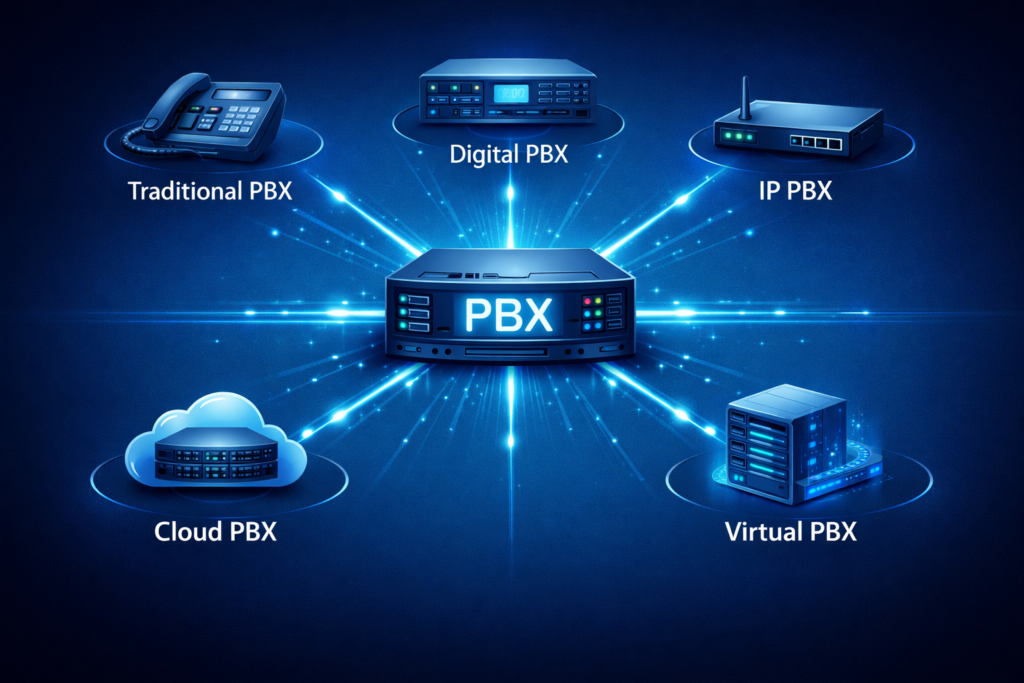
Understanding the Different Types of PBX Systems
Choosing the right phone system shapes how your business communicates for years to come.
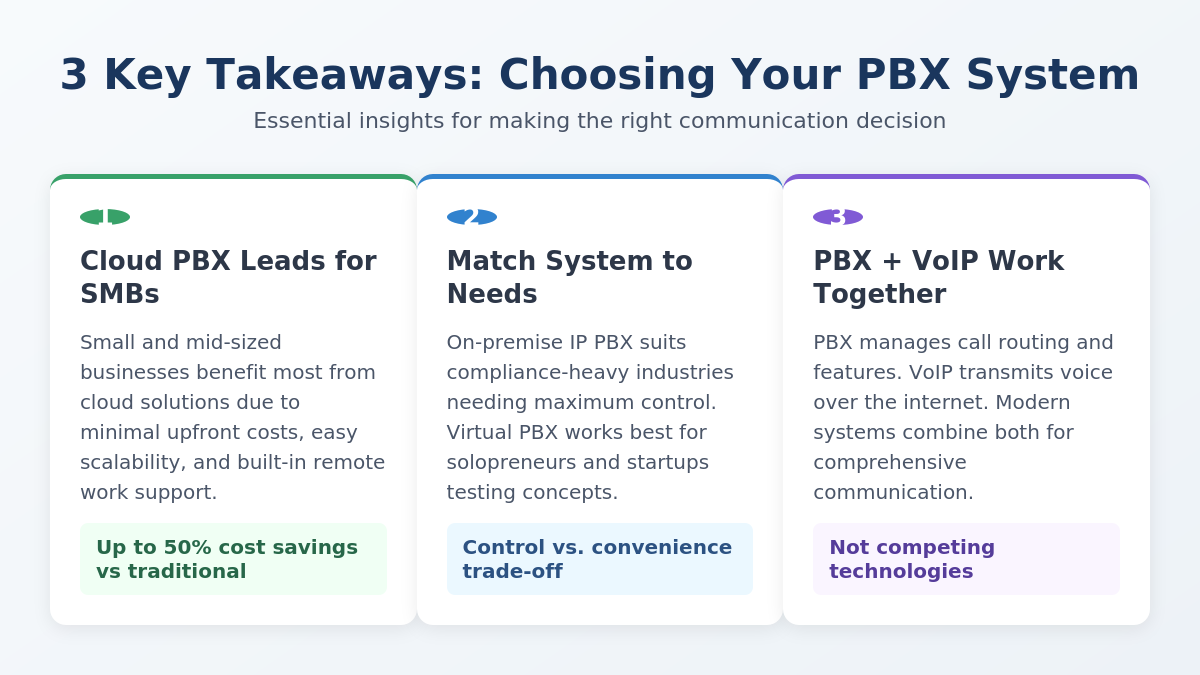
- Cloud-based PBX systems dominate the market due to their flexibility, lower costs, and remote work capabilities.
- Traditional and on-premise systems still serve specific use cases, particularly for businesses requiring maximum control.
- Understanding PBX vs VoIP is essential since these terms describe different aspects of business telephony.
- Small businesses benefit most from evaluating their call volume, growth plans, and technical resources before committing.
If you manage communications for a growing company, matching your PBX type to your operational reality could mean the difference between seamless collaboration and constant technical headaches.
Understanding the different types of PBX systems is fundamental to selecting a communication solution that actually fits your business. With the unified communications market expected to reach $779 billion by 2031, companies of all sizes are reevaluating their phone infrastructure. The challenge is that PBX phone systems come in several configurations, each with distinct advantages and limitations that affect daily operations, budgets, and long-term scalability.
This guide breaks down the primary types of PBX phone systems, explains the differences between cloud PBX vs on-prem deployments, and clarifies the often-confused relationship between PBX and VoIP technology. Whether you run a ten-person startup or manage IT for a mid-sized organization, you will find practical guidance for making an informed decision.
How Do You Define the Types of PBX Systems?
A PBX (Private Branch Exchange) phone system functions as the central hub for managing incoming and outgoing business calls. Rather than requiring a separate external phone line for each employee, a PBX routes calls through shared trunk lines, directing each call to the appropriate person or department.
Without a PBX, handling high call volumes would require purchasing individual phone lines for every desk, an arrangement that quickly becomes impractical and expensive. Modern PBX phone systems offer more than basic call routing and include voicemail, auto attendants, call forwarding, conferencing, and integration with business software.
The types of PBX systems have evolved over the past decade. Where businesses once had limited options centered on expensive on-premise hardware, today’s market offers everything from traditional systems to fully cloud-hosted platforms that require no physical equipment at your location.
How Do Traditional PBX Systems Work?
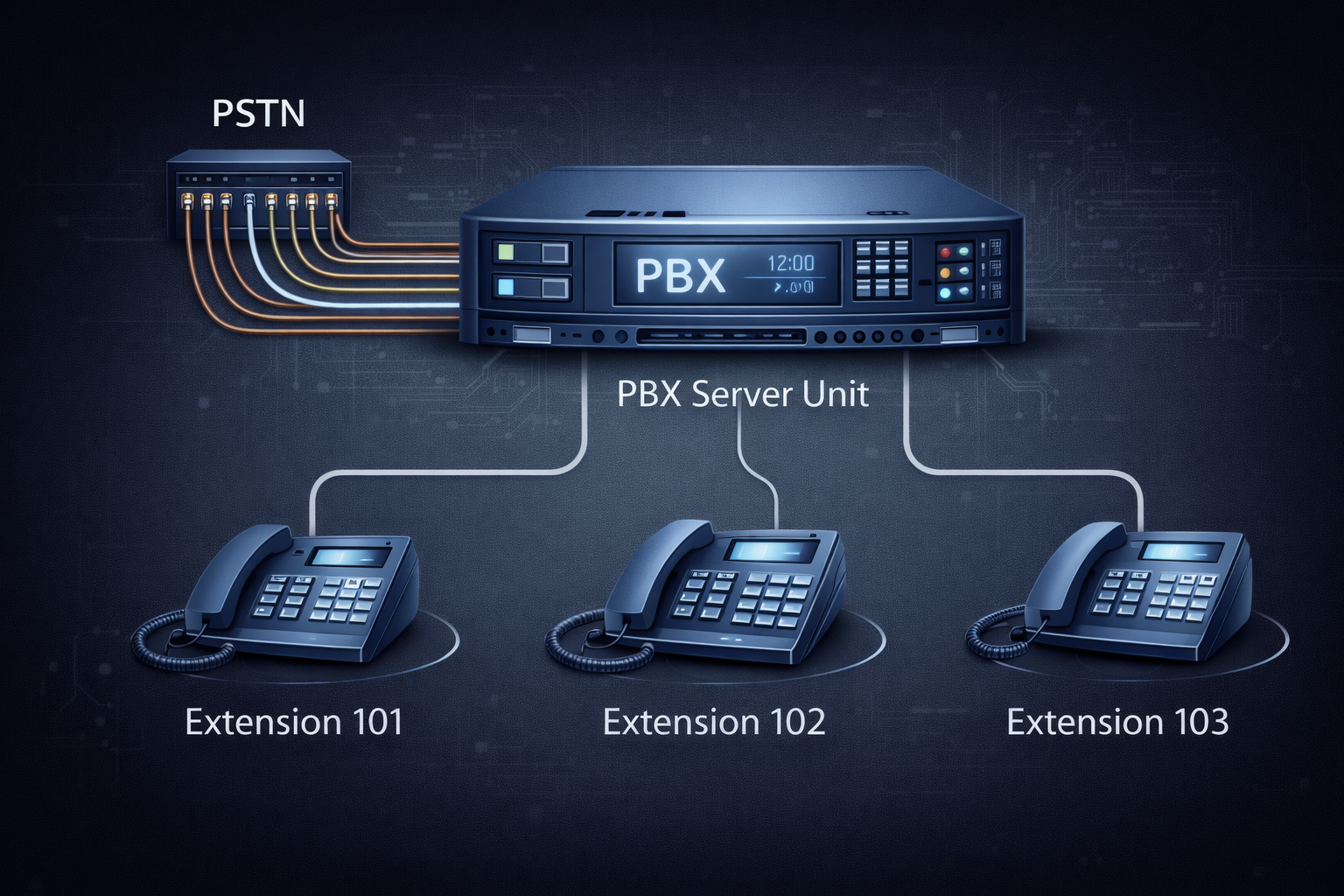
Traditional PBX systems were the original approach to business telephony, relying on physical hardware installed at your business location to manage calls over landlines connected to the public switched telephone network (PSTN).
The Hardware Investment Reality
These systems require a central unit, often called a Key Service Unit, along with physical phone lines and desk phones. Initial hardware costs range considerably based on system size, and individual handsets add to the investment. Beyond equipment costs, traditional systems demand professional installation and often require dedicated server room space.
Ongoing Maintenance Considerations
Maintaining traditional PBX infrastructure requires access to skilled technicians familiar with the hardware. Updates, repairs, and expansions all necessitate on-site work, which can mean delays when issues arise. For businesses with existing legacy systems that function well, the question becomes whether the reliability justifies the higher total cost of ownership compared to newer alternatives.
Traditional PBX remains viable for organizations with specific regulatory requirements, existing infrastructure investments, or locations where internet connectivity proves unreliable. However, most businesses exploring types of PBX systems find that newer options deliver better value.
What Makes Digital PBX Systems Different?
Digital PBX systems occupy the middle ground between traditional analog setups and fully internet-based solutions. They support both traditional phone lines and IP-based phones, making them attractive for businesses transitioning from legacy systems.
Bridging Old and New Technology
These systems handle calls across both traditional and VoIP technologies, offering compatibility that allows businesses to upgrade gradually rather than replacing everything at once. Sound quality often improves over older analog systems, and features like digital answering assistants and advanced call routing become available.
Limitations to Consider
While digital PBX provides a blend of technologies, it may not offer the full range of capabilities found in pure cloud solutions. Businesses seeking comprehensive unified communications, including video conferencing, team messaging, and CRM integration, may find digital PBX insufficient for their long-term needs. That said, for organizations with existing wiring infrastructure or those seeking a stepping stone toward full VoIP adoption, digital PBX offers a practical intermediate solution.
How Do On-Premise IP PBX Systems Operate?
On-premise IP PBX systems leverage VoIP technology while keeping the hardware at your business location. They connect to the outside world through SIP trunking, which replaces traditional phone lines with internet-based connections to the telephone network.
Advanced Features and Control
These systems deliver sophisticated capabilities, including interactive voice response menus, voicemail transcription, call recording, and integration with business applications. Because the equipment resides on your premises, your IT team maintains direct control over configuration, security policies, and data handling.
The Cloud PBX vs On-Prem Trade-off
The choice between cloud PBX vs on-prem often comes down to control versus convenience. On-premise IP PBX suits organizations that require granular control over their communication infrastructure, have dedicated IT resources, and prefer keeping voice data within their physical network. Industries with strict compliance requirements, such as healthcare and finance, sometimes favor this approach.
However, on-premise systems demand significant upfront investment and ongoing maintenance responsibility. Hardware eventually requires replacement, software needs updates, and troubleshooting falls to your internal team or contracted support.
Why Are Cloud-Based PBX Systems Transforming Business Communications?
Cloud-based PBX systems have emerged as the dominant choice for small and mid-sized businesses, and for good reason. These platforms host all infrastructure off-site with a service provider, eliminating the need for on-premise equipment beyond desk phones or softphone applications.
How Cloud PBX Delivers Cost Advantages
The financial case for cloud PBX begins with eliminating capital expenditure on server hardware. Instead of paying tens of thousands of dollars upfront, businesses pay predictable monthly fees based on user count. Organizations switching from traditional phone systems to VoIP-based solutions often reduce communication costs by up to 50%.
Monthly subscription models mean no surprise hardware replacement costs. When something needs updating, your provider automatically handles it. This predictability helps small business owners budget more effectively and avoid the maintenance cost spikes that plague legacy systems.
Scalability That Matches Business Growth
Adding new employees to a cloud PBX takes minutes rather than days. There is no waiting for technician visits or ordering additional hardware. For seasonal businesses or companies experiencing rapid growth, this flexibility proves invaluable. Reducing capacity during slower periods is equally straightforward, ensuring you only pay for what you actually need.
This scalability extends to geographic expansion as well. Opening a new office location requires only internet connectivity and devices. Employees in different cities can operate within the same phone system, maintaining consistent customer experiences regardless of where calls originate.
Supporting Remote and Hybrid Workforces
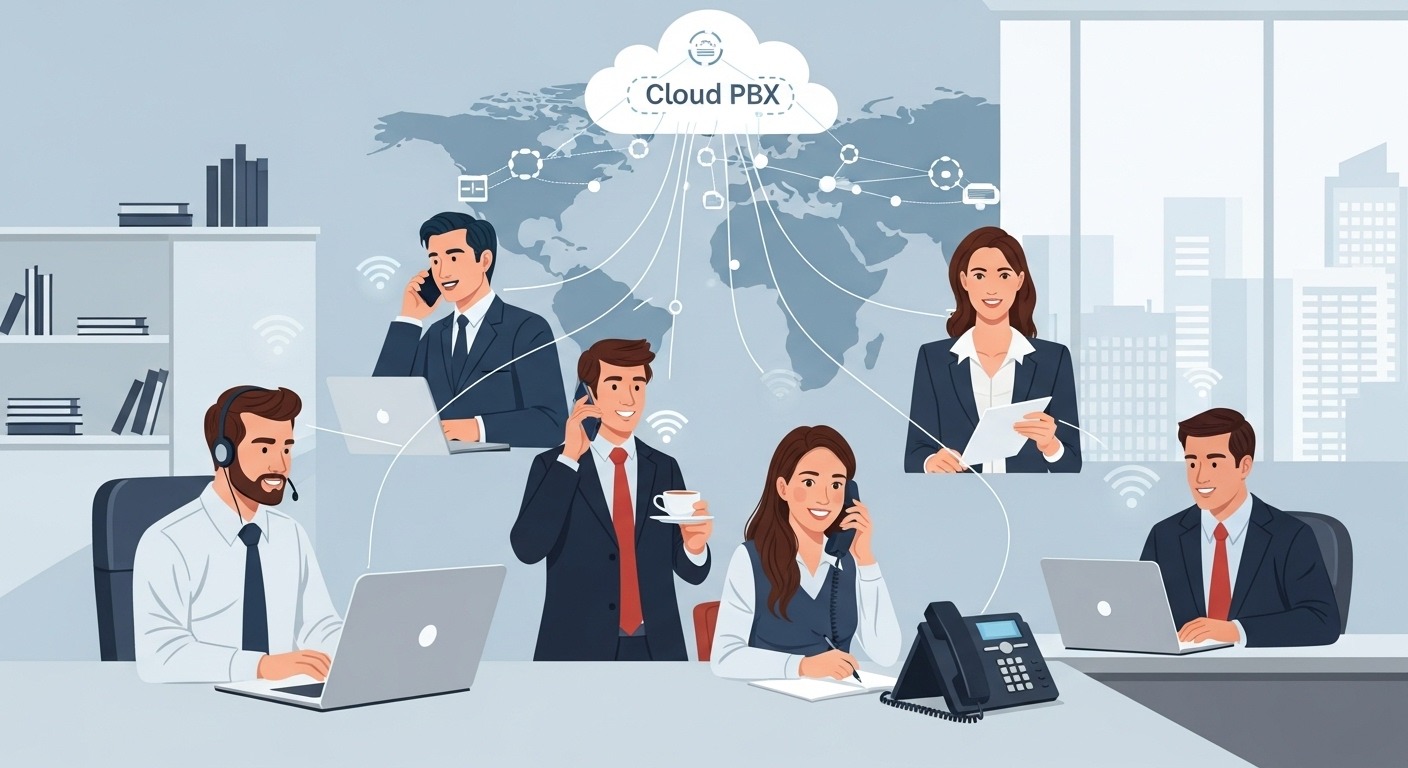
The shift toward distributed teams has accelerated cloud PBX adoption. Employees working from home, co-working spaces, or client sites access the full business phone system through softphone applications on laptops or mobile devices. Customers calling the main business number never know whether they are reaching someone in headquarters or someone working remotely.
Features like mobile apps, browser-based calling, and seamless call transfer between devices support the flexibility that modern workers expect. Video conferencing, team messaging, and presence indicators integrate naturally, creating unified communication platforms that surpass simple voice calling.
Reliability Through Redundancy
Reputable cloud PBX providers operate data centers across multiple geographic locations with automatic failover capabilities. If one server experiences issues, calls are routed through alternative infrastructure without interruption. This distributed architecture often delivers higher uptime than single-location on-premise systems that depend entirely on local hardware and internet connections.
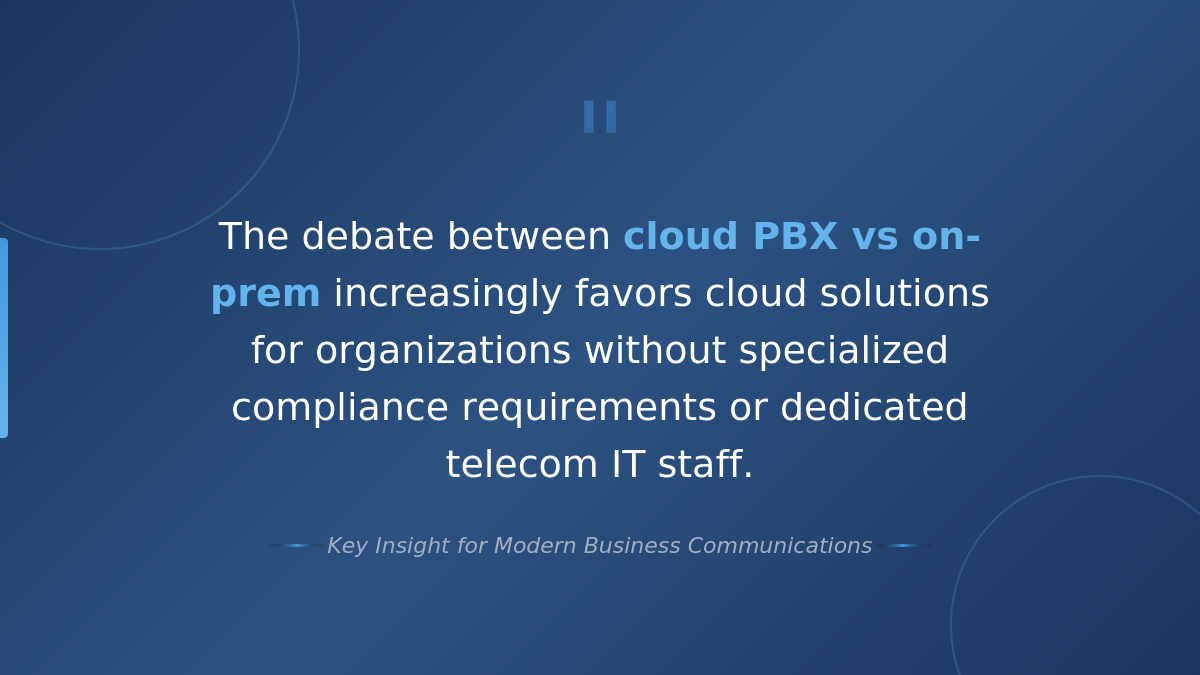
The debate between cloud PBX vs on-prem increasingly favors cloud solutions for organizations without specialized compliance requirements or dedicated telecom IT staff.
What Role Do Virtual PBX Systems Play?
Virtual PBX systems operate entirely over the internet with minimal hardware requirements. They appeal to very small businesses, solopreneurs, and startups that need professional phone capabilities without significant infrastructure investment.
Affordable Professional Presence
With virtual PBX, calls route to VoIP extensions, mobile phones, or landlines based on configured rules. A freelance consultant can present a professional business number that forwards to their cell phone, complete with auto attendant greetings and voicemail transcription. The caller experiences a polished business interaction while the consultant maintains flexibility about when and where to answer.
Ideal Use Cases
Virtual PBX works best for businesses without traditional office locations, remote-first companies, and organizations testing market concepts before committing to larger communication investments. Setup requires only a high-speed internet connection and compatible devices, making deployment almost instantaneous.
How Does PBX vs VoIP Actually Work?
One of the most common points of confusion when researching types of PBX systems involves understanding the relationship between PBX and VoIP. These terms describe different aspects of business telephony and are not mutually exclusive.
Understanding the Distinction
VoIP (Voice over Internet Protocol) refers to the technology that transmits voice data over the internet rather than traditional copper phone lines. PBX describes the system architecture that manages call routing, extensions, and phone features within an organization.
Modern PBX systems can use VoIP technology for call transmission while providing the call management capabilities businesses need. A cloud PBX, for instance, is fundamentally a VoIP-based system hosted by a provider. The PBX vs VoIP question often misses the point because most contemporary business phone solutions combine both elements.
What This Means for Your Business
When evaluating phone systems, focus less on whether something is called PBX or VoIP and more on the specific capabilities and deployment model. Questions about SIP trunking vs hosted PBX often prove more relevant for practical decision-making.
Five Questions to Ask Before Choosing a PBX System
Selecting from the available types of PBX systems requires an honest assessment of your business situation.
- What is your realistic call volume and pattern? Businesses with consistent high volume may benefit from unlimited channel pricing, while those with sporadic calling might prefer metered options.
- Do you have IT resources for system management? On-premise solutions demand ongoing technical attention. If your team lacks telecom expertise, cloud PBX eliminates this burden.
- How important is remote work capability? Organizations with distributed teams should prioritize cloud-based solutions designed for location-independent operation.
- What integration requirements exist? Modern cloud platforms connect with CRM systems, help desks, and collaboration tools. Legacy systems may lack these capabilities.
- What does your five-year growth plan look like? Scalability differs between PBX types. Plan for where your business is heading, not just where it stands today.
Frequently Asked Questions
What type of PBX system is best for small businesses?
Cloud-based PBX systems typically offer the best fit for small businesses due to their low upfront costs, easy scalability, and minimal maintenance requirements. They provide enterprise-grade features without the complexity of managing on-premise hardware.
Can I keep my existing phone numbers when switching PBX types?
Yes. Number porting allows you to transfer existing phone numbers to a new provider. The process typically takes one to two weeks, and reputable providers handle the paperwork on your behalf.
How much bandwidth does a VoIP-based PBX system require?
Each concurrent call requires approximately 85 kbps of bandwidth using standard codecs. Most modern business internet connections easily support dozens of simultaneous calls without quality degradation.
What happens to cloud PBX if my internet goes down?
Quality cloud PBX providers include failover options that route calls to backup numbers, mobile phones, or voicemail when your primary connection fails. This built-in redundancy often exceeds the reliability of on-premise systems that depend on single internet connections.
How long does it take to implement a new PBX system?
Implementation timelines vary by type. Cloud PBX systems often activate within hours or days. On-premise installations may require weeks for hardware procurement, installation, and configuration.
Make the Right Communication Decision for Your Business
Each type of PBX system serves specific business needs and circumstances. Traditional systems offer reliability for organizations with existing infrastructure investments. Digital PBX bridges legacy and modern technology. On-premise IP PBX provides control for compliance-focused businesses. Cloud-based PBX delivers flexibility, cost savings, and remote work support that modern organizations require. Virtual PBX serves small operations needing a professional presence without significant investment.
The direction of the market points clearly toward cloud-based and VoIP-powered solutions, particularly for small and mid-sized businesses seeking to reduce costs while improving communication capabilities. Understanding these options puts you in a position to choose technology that genuinely supports your operational goals.
SIP.US provides comprehensive VoIP SIP trunking solutions designed for businesses seeking reliable, scalable communication platforms. With instant provisioning, no long-term contracts, and Tier-1 network redundancy, modernizing your phone system becomes straightforward. Get started today to experience how the right communication infrastructure supports your business.

Mitch leads the Sales team at BCM One, overseeing revenue growth through cloud voice services across brands like SIPTRUNK, SIP.US, and Flowroute. With a focus on partner enablement and customer success, he helps businesses identify the right communication solutions within BCM One’s extensive portfolio. Mitch brings years of experience in channel sales and cloud-based telecom to every conversation.
Free SIP Trunk in 60 Seconds
Related Posts

What Is SIP? A Complete Guide to Session Initiation Protocol
Discover everything about SIP and how it revolutionizes communication. Learn what is SIP, its benefits, and how to implement it in your business for better connectivity.

What Is Internet Protocol? IP Definition and How It Works
Internet protocol is the addressing and routing system that gets every business call, email, and…
Analog Telephone Adapter: How to Choose an ATA for SIP
A single inexpensive device can keep your existing analog phones, faxes, and paging equipment working…