

Best Business Phone System for Small Businesses in 2026
Small businesses selecting their phone system in 2026 face an environment where cloud-based solutions have become the clear standard.
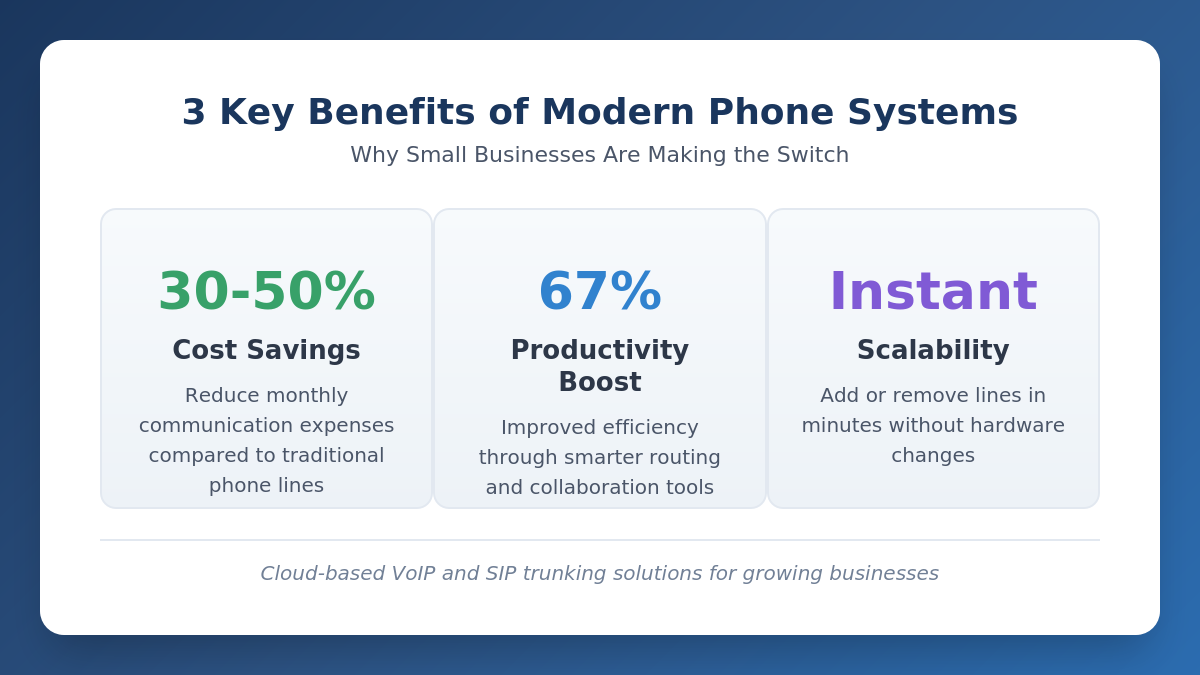
- VoIP and SIP trunking technologies deliver cost savings of 30–50% compared to traditional phone lines.
- Modern systems integrate voice, video, messaging, and collaboration tools into unified platforms.
- AI-powered features like intelligent call routing and real-time transcription are now accessible to businesses of all sizes.
- Scalability without hardware investments enables growing companies to add capacity instantly.
If your current phone system requires on-site equipment or locks you into long-term contracts, 2026 is the year to modernize with internet-based communication that grows alongside your business.
Small business owners evaluating their communication options today encounter a different market than even two years ago. Traditional landline systems that once dominated the SMB segment have given way to flexible, cloud-based solutions that leverage existing internet connections to deliver enterprise-grade capabilities at a fraction of the cost. VoIP technology can reduce communication costs by up to 45% while increasing productivity by 67% through smarter routing and enhanced collaboration features.
The shift toward SIP trunking and VoIP-based phone systems reflects broader changes in how small businesses operate. Distributed teams, remote work arrangements, and the need for seamless customer communication have made flexibility a non-negotiable requirement. A phone system that only functions within office walls no longer meets the demands of modern commerce. Understanding what separates adequate solutions from exceptional ones requires examining the core technologies, essential features, and evaluation criteria that define the best business phone system options available today.
What Makes the Best Business Phone System in 2026?
Identifying the best business phone system for your organization requires moving beyond feature checklists to evaluate how well a solution aligns with your operational realities. The most effective systems share several characteristics that distinguish them from legacy alternatives and budget options that sacrifice reliability for lower upfront costs.
Cost Efficiency and Transparent Pricing
Effective phone systems eliminate the unpredictable expenses associated with traditional telecommunications. Hidden fees, complex per-minute charges, and mandatory hardware purchases created budget uncertainty that many small businesses found unsustainable. Modern solutions offer transparent pricing structures where businesses pay predictable monthly rates for defined service levels. The elimination of physical phone lines removes installation costs, maintenance contracts, and the infrastructure limitations that once constrained how businesses could scale their communication capacity.
Small businesses implementing cloud-based phone solutions typically experience reductions in their monthly communication expenses within the first billing cycle. These savings compound over time as organizations avoid equipment upgrades, reduce IT support requirements, and eliminate long-distance charges.
Scalability for Growing Operations
The best phone systems grow alongside your business without requiring infrastructure overhauls or service interruptions. Adding new employees, opening additional locations, or supporting seasonal capacity fluctuations should involve simple administrative changes rather than technician visits or hardware purchases. This scalability extends in both directions, allowing businesses to reduce capacity during slower periods without being locked into fixed commitments that exceed actual needs.
Cloud-based architectures enable this flexibility by virtualizing communication resources. Unlike physical phone lines that require installation for each new connection, virtual channels can be provisioned instantly through online portals. A business that needs five phone lines today and fifteen next quarter can make that adjustment in minutes rather than weeks.
Feature-Rich Communication Tools
Modern phone systems deliver capabilities that were exclusively available to large enterprises just a few years ago. Auto-attendant systems professionally greet callers and efficiently route them. Call recording captures important conversations for training and compliance purposes. Voicemail-to-email transcription ensures messages reach recipients regardless of their location. Video conferencing, instant messaging, and file sharing integrate directly into the communication platform, eliminating the need for multiple disconnected applications.
These features enhance both internal collaboration and external customer interactions. Employees communicate more effectively across distributed teams while customers receive professional service experiences that build confidence and loyalty.
How Does VoIP for Business Transform Communication?
VoIP for business is the technical foundation underlying most modern phone systems. Voice over Internet Protocol converts traditional voice signals into digital data packets transmitted across internet connections, eliminating dependence on dedicated telephone infrastructure. This shift in how voice communication travels has created opportunities for innovation and cost reduction that benefit small businesses.

Cloud-Based Flexibility
Traditional phone systems tied businesses to physical locations and specific equipment. Employees could only access full phone functionality from their desks, and making changes required scheduling technician visits during business hours. VoIP for business eliminates these constraints by moving infrastructure to cloud servers accessible from any internet-connected device.
Employees can make and receive calls using desktop applications, mobile apps, or traditional desk phones, depending on their preferences and work situations. A salesperson visiting clients maintains the same business number and professional presence as if they were sitting in the office. A customer service representative working from home accesses identical call handling tools available to their in-office colleagues. This flexibility has become essential as small businesses embrace hybrid work models that combine remote and in-person arrangements.
Unified Communications Capabilities
VoIP technology enables integration across multiple communication channels that previously operated in isolation. Voice calls, video meetings, text messages, and collaborative tools converge into unified platforms where information flows between channels. A conversation that begins as a phone call can transition to video when visual context becomes important, then continue via messaging when participants move between meetings.
This unification improves productivity by eliminating context switching and reducing the time spent searching for information across disconnected systems. Teams collaborate more effectively when their communication tools work together rather than creating friction between different interaction modes.
What Features Define Top-Tier Phone Solutions?
Evaluating phone systems requires understanding which capabilities deliver meaningful operational value versus which represent marketing differentiation with limited practical benefit. The following features consistently provide measurable returns for small business implementations:
- Intelligent call routing directs incoming calls to the most appropriate team member based on caller history, time of day, agent availability, and custom business rules that reflect your operational priorities.
- Mobile applications extend full phone system functionality to smartphones, enabling employees to manage business communications without being tethered to physical office equipment.
- Real-time analytics provide visibility into call volumes, response times, and communication patterns that inform staffing decisions and identify improvement opportunities.
- CRM integration connects phone interactions with customer records, giving agents context about caller history and enabling automatic logging of communication activities.
- Redundant infrastructure ensures continuity through multiple data centers and automatic failover systems that maintain service even during localized outages.

These capabilities work together to create communication systems that enhance rather than constrain business operations. Organizations implementing comprehensive solutions report improvements in customer satisfaction and internal efficiency metrics.
Why Are SIP Trunk Providers the Preferred Choice?
SIP trunk providers have emerged as the preferred option for small businesses seeking maximum control over their communication infrastructure. SIP trunking connects existing phone system hardware to internet-based voice services, enabling businesses to preserve investments in compatible equipment while gaining access to modern capabilities and cost structures.
Enterprise-Grade Reliability Without Enterprise Costs
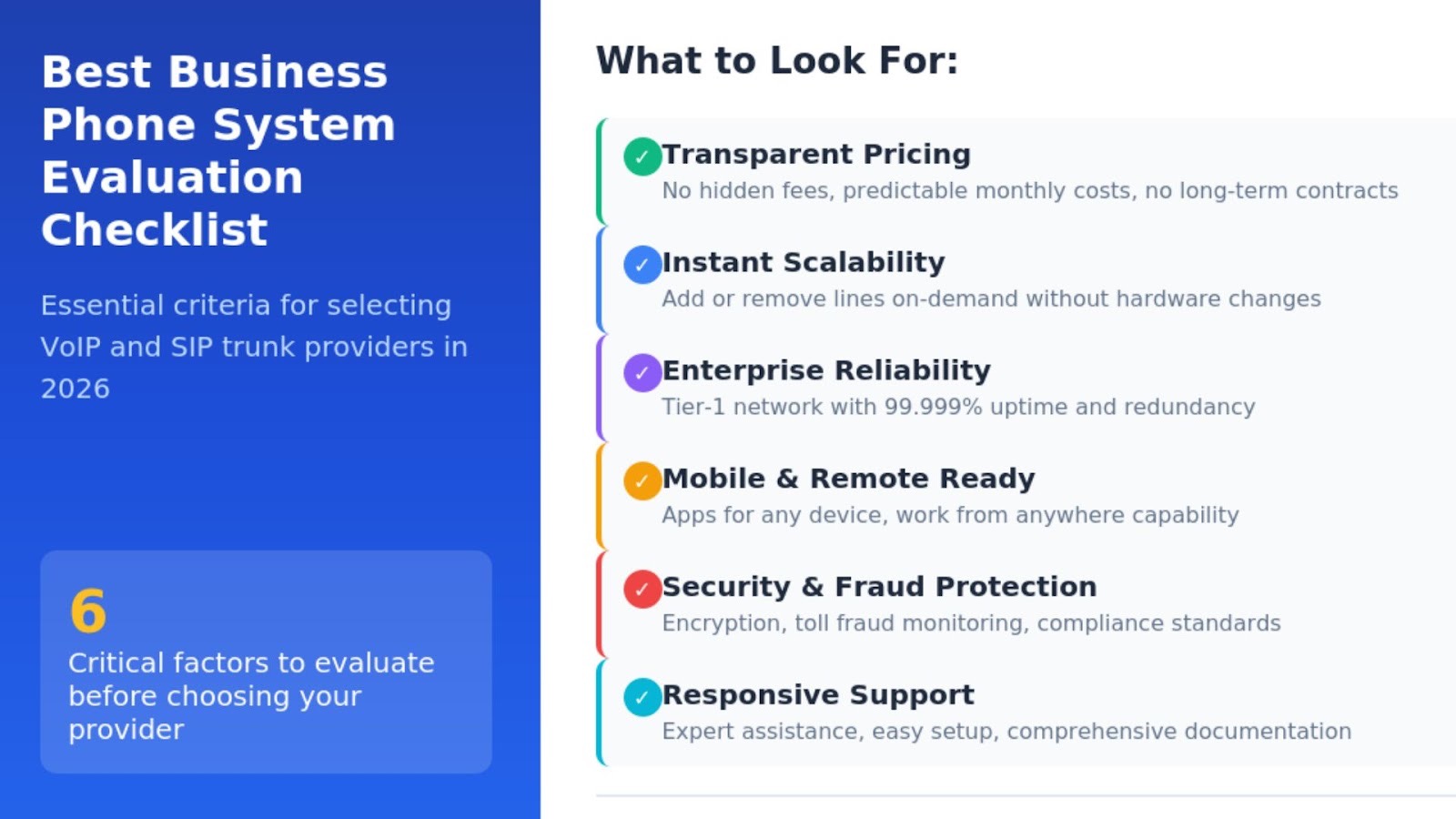
Quality SIP trunk providers operate Tier-1 network infrastructure with redundant connections across multiple geographic locations. This architecture delivers the reliability levels that enterprises require, with uptime guarantees exceeding 99.999% backed by service level agreements that hold providers accountable for performance standards. Small businesses gain access to infrastructure that matches or exceeds what large corporations deploy, without the capital expenditure or technical complexity associated with enterprise-grade solutions.
The SIP trunking market continues to expand as businesses recognize these advantages. Projections indicate the global market will reach nearly $158 billion by 2030, driven primarily by small and medium enterprises adopting solutions that were previously accessible only to larger organizations.
Seamless Integration with Existing Infrastructure
Many small businesses have invested in PBX systems that continue functioning effectively. SIP trunking preserves these investments by connecting existing equipment to modern voice services without requiring complete system replacement. This approach reduces transition costs and minimizes disruption compared to implementing entirely new platforms.
Compatibility extends across a broad range of systems, from open-source solutions like Asterisk and FreePBX to commercial platforms from major telecom manufacturers. Businesses can often complete initial configuration within hours using straightforward setup processes that require minimal technical expertise.
What Should You Look for in Affordable Business Phone Solutions?
Affordable business phone solutions balance cost control with capability. The cheapest options often sacrifice reliability, support quality, or feature access in ways that create hidden costs through lost productivity or customer dissatisfaction. Effective evaluation considers the total cost of ownership rather than the monthly rate alone.
Transparent pricing eliminates surprise charges that unpredictably inflate bills. Look for providers that clearly define what their quoted prices include and avoid complex usage-based formulas that make budget forecasting difficult. Month-to-month billing options provide flexibility, though annual commitments often deliver meaningful discounts for businesses confident in their provider selection.
Support quality varies across providers, with some offering responsive assistance from knowledgeable representatives while others route inquiries through overseas call centers with limited technical depth. Small businesses without dedicated IT staff benefit from providers that offer implementation assistance, ongoing technical support, and comprehensive documentation that enables self-service troubleshooting.
How Do AI and Automation Enhance Modern Phone Systems?
Artificial intelligence has transformed the best business phone systems into intelligent platforms that actively improve operational outcomes. These capabilities, once exclusive to enterprise contact centers with substantial technology budgets, now come standard with many small business solutions.
Intelligent call routing analyzes caller intent, agent skills, and historical patterns to automatically optimize connection decisions. Rather than simple round-robin distribution, AI-powered routing matches callers with representatives most likely to resolve their needs efficiently. Businesses can improve first-call resolution rates while reducing average handle times.
Real-time transcription automatically converts voice conversations to text, creating searchable records without manual note-taking. Sentiment analysis identifies calls where emotions escalate, enabling supervisors to intervene before situations deteriorate. Automated post-call summaries extract action items and key discussion points, ensuring follow-through on commitments made during conversations.
These capabilities enhance productivity without requiring significant additional investment or technical expertise. Small businesses leverage the same AI technologies that power sophisticated enterprise contact centers, competing effectively with larger organizations on customer experience metrics.
What Security Standards Should You Expect?
Encryption protocols secure voice traffic during transmission, preventing eavesdropping on business conversations. Strong authentication requirements protect administrative access to phone system controls. Regular security updates address emerging vulnerabilities before they can be exploited. Provider security certifications demonstrate compliance with established standards and provide assurance that appropriate protections are in place.
Toll fraud protection deserves particular attention, as compromised phone systems can generate substantial unauthorized charges before detection. Effective providers implement real-time monitoring that identifies suspicious calling patterns and automatically blocks potentially fraudulent activity, protecting businesses from financial exposure.

Frequently Asked Questions
How much can small businesses save by switching to VoIP or SIP trunking? Small businesses report worthwhile savings compared to traditional phone systems. These reductions come from eliminating physical line rentals, reducing long-distance charges, avoiding hardware maintenance costs, and consolidating multiple communication tools into unified platforms. The exact savings depend on current spending levels and usage patterns, but most organizations see meaningful reductions within the first billing cycle.
What internet speed do I need for a business phone system? Most VoIP and SIP trunking services require approximately 85–100 Kbps of bandwidth per concurrent call using standard codecs. Organizations with multiple simultaneous calls should ensure adequate bandwidth and consider quality of service configurations that prioritize voice traffic over other data. Standard business broadband connections easily support multiple simultaneous calls.
Can I keep my existing phone numbers when switching providers? Yes, number porting allows businesses to transfer existing phone numbers to new providers. The process typically takes one to two weeks, depending on the releasing carrier, and service continues uninterrupted throughout the transition. Porting preserves business continuity by maintaining the contact information customers and partners already have on file.
What happens to my phone service during an internet outage? Quality providers offer failover options that route calls to backup destinations during connectivity disruptions. These configurations can direct calls to mobile phones, alternate locations, or voicemail systems until primary service is restored. Some businesses maintain secondary internet connections specifically to ensure continuity during outages.
Build Your Communication Foundation for Growth
Selecting the best business phone system positions your organization for sustainable growth while reducing operational friction and communication costs. The technologies available today, from VoIP for business and SIP trunking to AI-powered automation, deliver capabilities that transform how small businesses connect with customers and collaborate internally.
Prioritize providers that demonstrate commitment to small business success through transparent pricing, responsive support, and solutions designed for organizations without dedicated IT resources. Look for platforms that enable immediate productivity gains while providing room to grow as your business expands.
SIP.US delivers the reliability, features, and straightforward pricing that growing businesses need. With instant provisioning, enterprise-grade network infrastructure, and a powerful self-service control panel, you can modernize your communications quickly and confidently. Get started with SIP.US today and experience the difference that quality SIP trunking makes for your business operations.

Mitch leads the Sales team at BCM One, overseeing revenue growth through cloud voice services across brands like SIPTRUNK, SIP.US, and Flowroute. With a focus on partner enablement and customer success, he helps businesses identify the right communication solutions within BCM One’s extensive portfolio. Mitch brings years of experience in channel sales and cloud-based telecom to every conversation.
Free SIP Trunk in 60 Seconds
Related Posts

SIP Trunking with PBX Systems: How It Works, Compatibility & Migration
Most businesses can connect SIP trunks to the PBX they already own, and the right…

What Is a DID Number? Direct Inward Dialing Explained
Unlock the potential of your communication system with our Beginner’s Guide to DID Numbers and SIP Trunks, offering cost-effective, scalable solutions for modern businesses and individuals.

What Is SIP? A Complete Guide to Session Initiation Protocol
Discover everything about SIP and how it revolutionizes communication. Learn what is SIP, its benefits, and how to implement it in your business for better connectivity.