

What is a SIP PBX System? Everything You Need to Know
Business communications demand flexibility, cost efficiency, and scalability that traditional phone systems can’t deliver. SIP PBX systems combine the reliability of private branch exchange technology with the power of internet-based calling to transform how organizations communicate.
- SIP PBX systems eliminate expensive physical phone lines while providing enterprise-grade features.
- Organizations typically reduce communication expenses by 30–50% after transitioning from legacy systems.
- Advanced capabilities include unified communications, remote work support, and seamless scalability.
Choose SIP PBX options that match your business needs: on-premise, cloud-based, or hybrid configurations.
Organizations require flexible, scalable solutions that support both traditional voice calling and modern digital collaboration. The global unified communications market is expected to expand to $417 billion by 2030 as companies transition from legacy phone systems to internet-based alternatives. SIP PBX combines proven private branch exchange functionality with the flexibility of Session Initiation Protocol technology.
A SIP PBX system integrates voice, video, messaging, and collaboration tools into a unified platform that leverages your existing internet infrastructure. Unlike traditional PBX systems that rely on expensive physical phone lines and proprietary hardware, quality providers enable organizations to modernize their communications without abandoning their current investments. This approach delivers immediate operational improvements while providing the foundation for advanced business capabilities.
What is a SIP PBX System?
A SIP PBX system combines two essential technologies that work together to deliver modern business communications. The PBX (Private Branch Exchange) component manages internal call routing, user extensions, voicemail, and other telephony features within your organization. The SIP (Session Initiation Protocol) component handles the digital communication protocols that enable voice, video, and messaging services over internet connections.
Traditional PBX systems require dedicated phone lines, expensive hardware installations, and complex maintenance procedures. SIP PBX eliminates these limitations by converting voice communications into digital data packets that travel over your internet infrastructure. Organizations can access enterprise-grade communication features without the expenses associated with legacy telephone equipment.
The integration creates a hybrid solution that preserves the reliability and feature-rich capabilities of traditional PBX systems while adding the flexibility and cost-effectiveness of internet-based communications. Companies can maintain their existing phone numbers, call routing configurations, and user extensions while gaining access to advanced features previously available only to large enterprises.
How Does a SIP PBX System Work?
SIP PBX systems operate through a sophisticated process that seamlessly converts traditional voice communications into digital data streams. When a user initiates a call, the SIP protocol establishes a connection session between the caller and recipient while the PBX system manages call routing, feature activation, and resource allocation.
The process begins when your PBX system receives a call request from an internal extension or external number. The SIP protocol analyzes the destination information and determines the optimal routing path based on your configured dial plans and business rules. For internal calls, the system routes communications directly between extensions without involving external networks. For external calls, SIP trunks connect your PBX to the public switched telephone network through your internet service provider.
Voice data undergoes real-time conversion from analog signals into compressed digital packets optimized for internet transmission. Advanced codecs ensure high-quality audio while minimizing bandwidth consumption. The receiving device reverses this process, converting digital packets back into clear, natural-sounding voice communications. This entire conversion happens in milliseconds, maintaining the seamless experience users expect from phone systems.
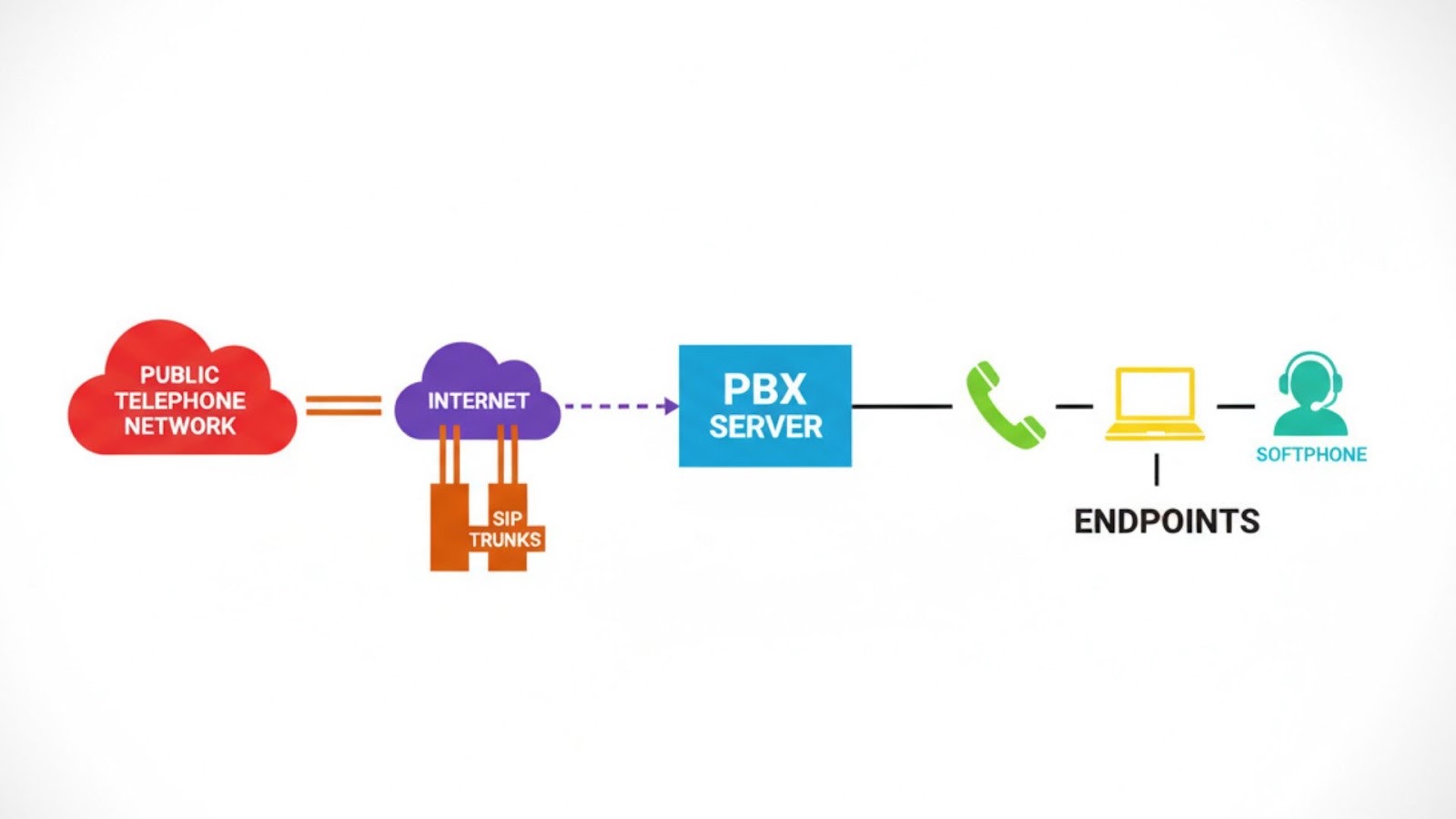
Session management is another factor of SIP PBX functionality. The protocol continuously monitors connection quality, manages bandwidth allocation, and implements automatic failover procedures when network issues arise. Features like call transfer, conference calling, and voicemail integration operate through SIP messaging that coordinates between different system components while maintaining call continuity.
What Are the Key Differences of SIP PBX vs Traditional PBX vs IP PBX?
Understanding the distinctions between PBX vs IP PBX systems and SIP PBX solutions helps organizations make informed decisions about their communication investments. Each approach offers specific advantages depending on business requirements, technical capabilities, and growth objectives.
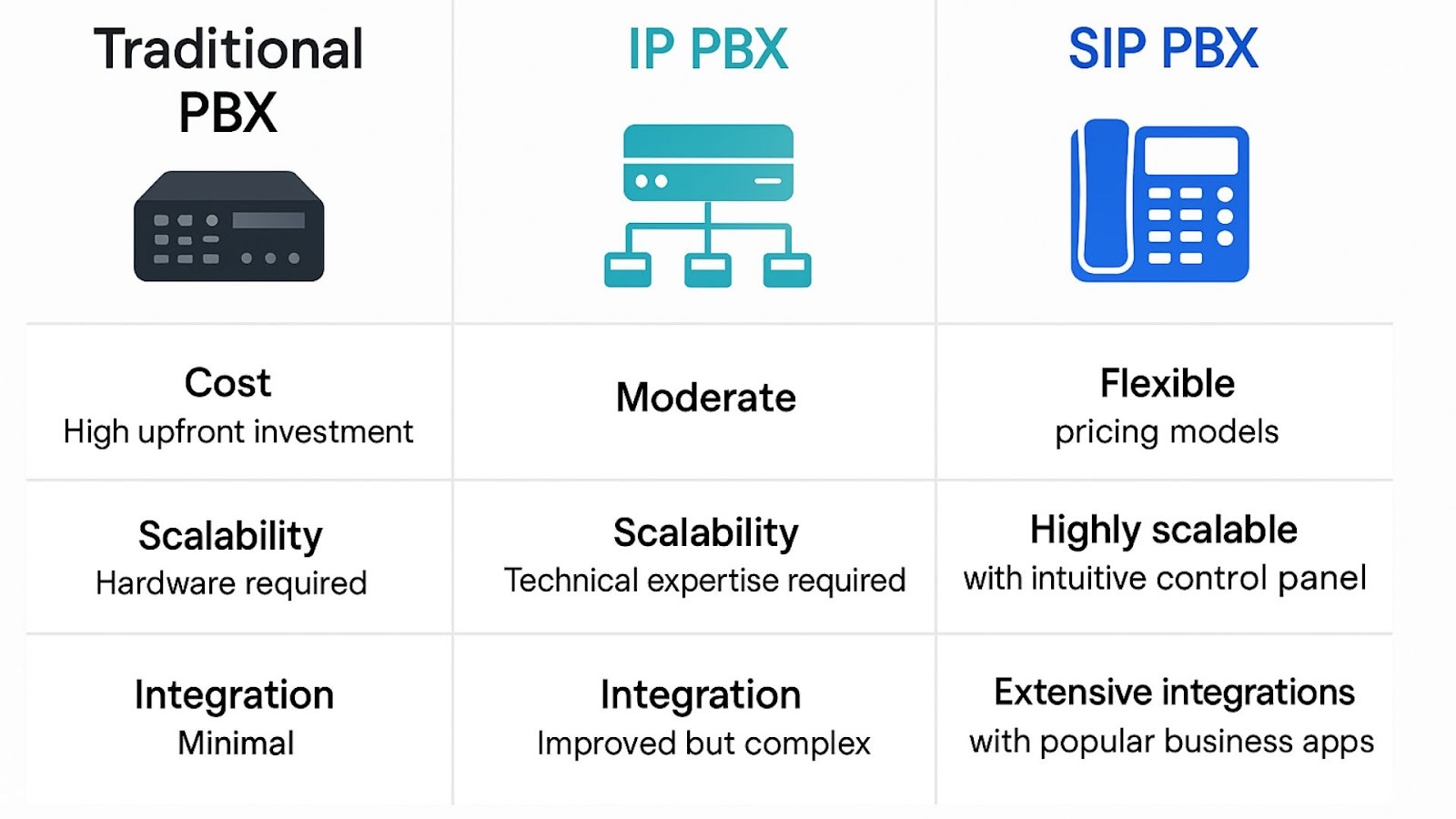
Traditional PBX systems rely on circuit-switched technology that creates dedicated connections between callers using physical telephone lines. These systems require upfront investments in proprietary hardware, professional installation services, and ongoing maintenance contracts. While reliable, traditional PBX systems offer limited scalability and lack integration capabilities with modern business applications.
IP PBX systems are the next evolution, using internet protocol to manage voice communications over data networks. These systems typically require on-premise servers and specialized hardware components installed at business locations. IP PBX solutions provide enhanced features compared to traditional systems while reducing some operational costs, though they still require technical expertise for management and maintenance.
SIP PBX systems offer the most advanced and flexible approach by leveraging industry-standard protocols that enable seamless integration with communication tools and platforms. Unlike proprietary IP PBX solutions, SIP-based systems work with equipment from multiple vendors, preventing vendor lock-in situations. This interoperability extends to software applications, enabling integration with CRM systems, collaboration platforms, and business productivity tools.
Cost structures differ between these approaches. Traditional and IP PBX systems require substantial capital expenditures for equipment purchases and installation services. SIP PBX typically operates on subscription-based models that distribute costs over time while including maintenance, updates, and technical support.
What Are the Benefits of SIP PBX?
Organizations implementing SIP PBX systems consistently report improvements across multiple operational areas. These benefits include cost savings, enhanced productivity, improved customer experiences, and increased competitive advantages.
- Dramatic Cost Reduction: Businesses typically reduce communication expenses by 30–50% when transitioning from traditional phone systems to SIP-based solutions. Eliminating physical phone lines, reducing long-distance charges, and consolidating communication services create immediate and ongoing savings.
- Instant Scalability: Adding new users, locations, or communication channels requires simple administrative changes rather than complex hardware installations. Organizations can respond immediately to business growth, seasonal fluctuations, or changing operational requirements without delays or infrastructure investments.
- Advanced Feature Access: SIP PBX platforms provide enterprise-grade capabilities including auto-attendants, call recording, advanced routing options, and detailed analytics. These features were previously available only to large organizations with substantial technology budgets.
- Remote Work Enablement: Employees can access full business phone system functionality from any internet-connected device, supporting distributed teams and flexible work arrangements.
- Unified Communications Integration: Voice, video, messaging, and collaboration tools operate through integrated platforms that streamline workflow efficiency. Teams can transition between communication modes while maintaining context and productivity.
- Enhanced Reliability: Modern SIP providers implement redundant infrastructure, automatic failover capabilities, and quality of service controls that often exceed the reliability of traditional phone systems. Organizations experience fewer outages and improved call quality compared to legacy solutions.
How Do Businesses Deploy SIP PBX?
Organizations can choose from three primary deployment models that align with security requirements, technical capabilities, and operational preferences. Each approach offers distinct advantages depending on business priorities and organizational constraints.
On-Premise SIP PBX systems install hardware and software components at business locations, providing complete control over communication infrastructure. Organizations maintain direct oversight of security configurations, data handling procedures, and system modifications. This approach suits businesses with stringent compliance requirements, substantial IT resources, and preferences for local data control. While requiring higher upfront investments and ongoing technical management, on-premise systems offer maximum customization and independence from external services.
Cloud-Based SIP PBX solutions host all infrastructure components with service providers, eliminating hardware requirements and technical management responsibilities. Organizations access full PBX functionality through internet connections without maintaining servers, software, or specialized equipment. Cloud deployments offer rapid implementation, automatic updates, and professional technical support. This model particularly benefits organizations with limited IT resources, multiple locations, or requirements for quick scalability.
Hybrid SIP PBX configurations combine on-premise and cloud elements to balance control requirements with operational flexibility. Organizations might maintain core PBX functionality locally while leveraging cloud services for specific features like voicemail, conferencing, or disaster recovery. This approach enables gradual migration strategies that preserve existing investments while adding cloud capabilities.
When choosing your deployment, consider factors such as regulatory compliance needs, available IT expertise, budget constraints, and growth projections. Organizations with specialized security requirements often prefer on-premise or hybrid deployments, while those prioritizing rapid implementation and cost efficiency typically choose cloud-based solutions.
Which Advanced SIP PBX Features Are Best for Modern Business?
Modern SIP solutions provide sophisticated capabilities that transform how organizations manage communications, collaborate with teams, and engage with customers. These advanced features create comprehensive business communication platforms.

Artificial Intelligence Integration enables intelligent call routing that analyzes caller information, conversation history, and business rules to automatically connect customers with the most appropriate representatives. AI-powered analytics provide insights into communication patterns, helping organizations optimize staffing levels and improve customer service delivery. Real-time transcription services convert voice interactions into searchable text records that enhance compliance and quality assurance programs.
Microsoft Teams Integration through Direct Routing creates unified communication experiences that combine enterprise telephony with collaboration platforms. Users can make external calls directly through Teams while maintaining access to advanced PBX features like call transfer, conference bridges, and voicemail. This integration streamlines workflow efficiency by eliminating the need to switch between separate communication tools.
Enhanced Security Protocols include end-to-end encryption for voice traffic, advanced fraud detection systems, and compliance frameworks that meet industry-specific requirements. Automated monitoring systems identify suspicious calling patterns and implement protective measures before fraudulent activity can impact operations. Session border controllers provide additional security layers while ensuring optimal call quality and reliability.
Business Continuity Features ensure communication availability during network outages, natural disasters, or other disruptive events. Automatic failover routing redirects calls to backup locations or mobile devices when primary systems become unavailable. Geographic redundancy distributes communication infrastructure across multiple data centers to eliminate single points of failure.
How Does SIP Trunk PBX Integration Work?
SIP trunk PBX integration connects organizations’ existing phone systems with modern internet-based communication services. This process bridges traditional telephony infrastructure with digital communication protocols while preserving operational continuity.
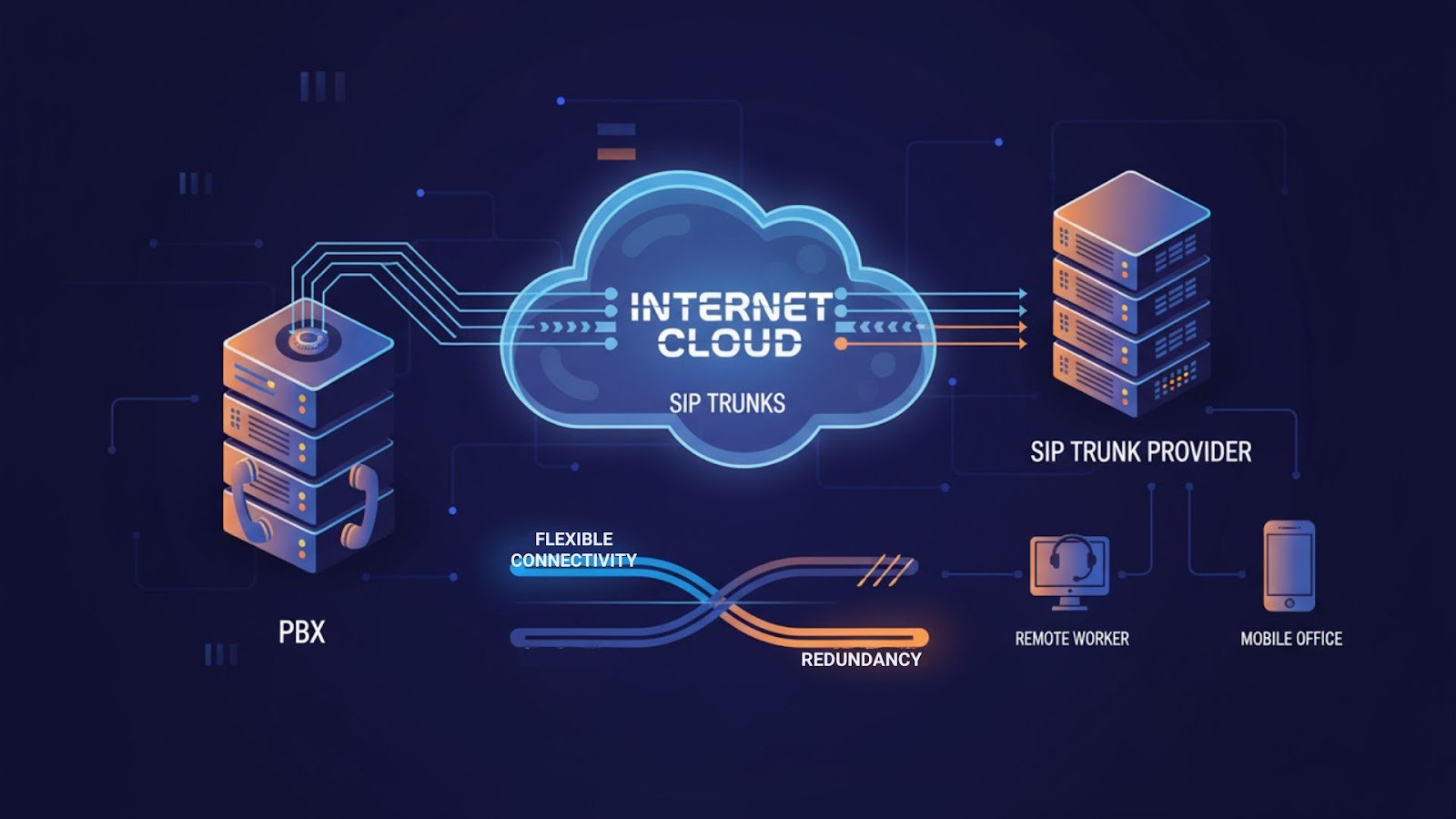
SIP trunks function as virtual telephone lines that carry voice, video, and messaging traffic over internet connections instead of physical copper wires. Each trunk can handle multiple simultaneous communications sessions, providing more efficient resource utilization compared to traditional phone lines. Organizations typically require fewer SIP trunks than physical lines due to statistical multiplexing that optimizes bandwidth usage across all communications.
Integration involves configuring your existing PBX system to communicate with SIP trunk providers through session border controllers or SIP gateways. These devices handle protocol translation, security enforcement, and quality optimization to ensure seamless connectivity between different system components. Professional configuration ensures optimal call routing, feature activation, and troubleshooting capabilities.
Quality of service configuration prioritizes voice traffic over other data types to maintain call clarity and minimize latency issues. Bandwidth requirements depend on the number of simultaneous calls and selected audio codecs, with typical business deployments requiring approximately 85 kbps per concurrent call when using the G.711 codec.
Network redundancy ensures communication availability through multiple internet service providers, backup routing configurations, and automatic failover procedures. Organizations can implement geographically diverse connectivity options that maintain service availability during local network outages or infrastructure maintenance procedures.
What Are the Best Practices for Implementing Your SIP PBX System?
Implementing a SIP system works best when you plan ahead and take a structured approach. Start by confirming technical compatibility, then focus on setup, training, and getting your team comfortable with the new tools, all while keeping your daily operations running smoothly.
Assessment and Planning
Start by taking a clear look at how your business communicates today and where it’s headed. Review your current phone setup, call volumes, and how your system connects with other tools you use, like CRMs or help desk platforms. This assessment helps you decide which SIP features matter most and set realistic goals and timelines for your rollout.
Provider Selection
Choosing the right SIP trunk provider can make or break your experience. Look for a provider with a strong uptime record, responsive support, and straightforward pricing. Check their coverage area and security standards, and don’t be afraid to ask for clear service level agreements. The goal is to find a partner whose services truly fit your business needs, not just your budget.
Technical Configuration
Once you’ve selected your provider, it’s time to get the system ready. Prepare your network, install the necessary equipment, and test everything before going live. Technicians will configure call routing, security settings, and quality controls to ensure strong performance. A thorough test run confirms that calling, conferencing, transfers, and voicemail all work seamlessly from day one.
Staff Training and Migration
Rolling out a new phone system works best when everyone knows what to expect. Offer simple, hands-on training and introduce the system in phases, starting with a small group before expanding to full departments or locations. This phased approach helps you catch and fix issues early while keeping your business running without interruptions.
Ongoing Optimization
Once your SIP PBX is live, the work doesn’t stop there. Keep an eye on system performance, call quality, and user feedback. Regular check-ins help identify new needs, feature upgrades, or settings that can improve the experience. Continuous optimization ensures your communications stay efficient, reliable, and ready to scale as your business grows.
Frequently Asked Questions
What is the difference between SIP PBX and traditional PBX systems? SIP PBX systems use internet protocols to transmit voice communications as digital data packets, while traditional PBX systems rely on dedicated physical phone lines. SIP PBX solutions offer greater flexibility, lower costs, and advanced features compared to traditional systems that require expensive hardware and maintenance contracts.
Is SIP PBX suitable for small businesses? Yes, SIP PBX systems are particularly beneficial for small businesses because they provide enterprise-grade features without requiring substantial upfront investments. Small businesses can access advanced capabilities like auto-attendants, call routing, and unified communications through subscription-based models that scale with business growth.
What internet requirements are needed for SIP PBX? SIP PBX systems require reliable broadband internet connections with sufficient bandwidth to handle voice traffic. Organizations typically need approximately 85 kbps per simultaneous call using the G.711 codec, though specific requirements depend on selected audio codecs and the number of concurrent users. Quality of service configuration helps prioritize voice traffic for optimal performance.
Can SIP PBX integrate with existing business applications? Modern SIP PBX systems offer extensive integration capabilities with CRM systems, Microsoft Teams, collaboration platforms, and other business applications. These integrations enable features like click-to-call from customer databases, automatic call logging, and unified messaging platforms that streamline workflow efficiency.
What security features do SIP PBX systems provide? Advanced SIP PBX systems include end-to-end encryption, fraud detection systems, session border controllers, and compliance frameworks that meet industry-specific requirements. Automated monitoring identifies suspicious activity while implementing protective measures to prevent unauthorized access or fraudulent calling patterns.
How do organizations typically migrate to SIP PBX systems? Migration typically follows a phased approach starting with assessment, provider selection, technical configuration, staff training, and gradual implementation. Organizations often begin with pilot groups before expanding system-wide, allowing for issue resolution and process refinement while maintaining business continuity throughout the transition.
Modernize Your Communications with SIP PBX
SIP PBX is the preferred approach for businesses seeking to modernize their infrastructure without sacrificing reliability or functionality. Market projections indicate continued growth in SIP-based communication adoption as organizations recognize the value of flexible, scalable solutions.
Whether your organization operates from a single location or manages distributed teams across multiple regions, SIP PBX systems offer the capabilities needed to succeed. The transition from legacy phone systems to modern SIP-based solutions is an investment in your company’s future.
SIP.US makes it easy to modernize your phone system with reliable, enterprise-grade SIP trunking built for flexibility and control. Our fully automated platform lets you add channels, manage numbers, and monitor performance in minutes, all without contracts or setup fees. Get started today and experience a smarter, more cost-effective way to connect your business.

Mitch leads the Sales team at BCM One, overseeing revenue growth through cloud voice services across brands like SIPTRUNK, SIP.US, and Flowroute. With a focus on partner enablement and customer success, he helps businesses identify the right communication solutions within BCM One’s extensive portfolio. Mitch brings years of experience in channel sales and cloud-based telecom to every conversation.
Free SIP Trunk in 60 Seconds
Related Posts

What Is a DID Number? Direct Inward Dialing Explained
Unlock the potential of your communication system with our Beginner’s Guide to DID Numbers and SIP Trunks, offering cost-effective, scalable solutions for modern businesses and individuals.

What Is SIP? A Complete Guide to Session Initiation Protocol
Discover everything about SIP and how it revolutionizes communication. Learn what is SIP, its benefits, and how to implement it in your business for better connectivity.

What Is Internet Protocol? IP Definition and How It Works
Internet protocol is the addressing and routing system that gets every business call, email, and…