

Top SIP Trunk Software for Seamless Communication
Choosing the right SIP trunk software can reduce communication costs by up to 65% while delivering enterprise-grade features to businesses of any size.
- The global VoIP market is projected to reach $326.27 billion by 2032, with SIP trunking accounting for the largest share of all industry spending.
- Modern SIP software integrates voice, video, messaging, and collaboration tools into unified platforms that support remote and hybrid workforces.
- Essential features to evaluate include scalability, redundancy, security protocols, PBX compatibility, and real-time analytics capabilities.
Businesses that prioritize reliability, transparent pricing, and responsive support position themselves to scale communications without disruption.
Traditional phone systems that once required expensive hardware installations and dedicated phone lines are giving way to internet-based solutions that deliver greater flexibility and substantial cost reductions. The VoIP market is expected to grow from $144.77 billion in 2024 to over $326 billion by 2032, reflecting how organizations across industries are recognizing the value of modern SIP trunking services. SIP trunk software sits at the center of this evolution, providing the infrastructure that connects private phone systems to the public telephone network through internet protocols rather than physical copper lines.
For IT directors and business owners evaluating their communication infrastructure, understanding what separates capable SIP trunking from basic offerings has become essential. The right solution can streamline operations, reduce monthly telecom expenses, and provide advanced features that were previously available only to large enterprises with substantial budgets. This guide examines the capabilities that define effective SIP trunk software and outlines what organizations should prioritize when modernizing their business VoIP solutions.
What Is SIP Trunk Software and Why Does It Matter for Business Communication?
Understanding the technology behind SIP trunking helps decision-makers evaluate solutions more effectively. Rather than relying on complex technical jargon, it helps to think of SIP trunk software as the digital bridge connecting your existing phone system to the outside world.
How SIP Trunking Technology Works
Session Initiation Protocol, or SIP, is a signaling standard that manages voice and multimedia communication sessions over internet networks. When a business deploys SIP software, analog voice signals are converted into digital data packets that travel across broadband connections. This conversion happens seamlessly, allowing employees to make and receive calls using their existing phones, computers, or mobile devices.
The software component manages the entire process: establishing connections when calls are initiated, maintaining quality during conversations, and properly terminating sessions when calls end. Unlike legacy systems that required dedicated physical lines for each concurrent call, SIP trunks create virtual channels that can be added or removed based on actual usage. This architecture changes how businesses think about telecom infrastructure, shifting from fixed hardware investments to flexible, software-defined services.

Why Businesses Are Making the Switch
The transition away from traditional phone systems reflects practical business needs. Legacy infrastructure requires ongoing maintenance, physical space for equipment, and relationships with multiple vendors for different services. SIP trunk software consolidates these requirements into a single platform that can be managed through web-based dashboards. Organizations gain visibility into call patterns, the ability to adjust capacity in real time, and access to features that support modern work arrangements. The technology also eliminates geographic limitations, allowing businesses to establish local presence in new markets without physical office locations.
What Are the Essential Features of Leading SIP Trunking Software?
When evaluating SIP trunk options, certain capabilities distinguish enterprise-ready solutions from basic offerings. The following features are the foundation of effective business communication tools:
- Automatic Failover and Redundancy: Quality SIP software routes calls through backup systems when primary connections experience issues, ensuring business continuity during outages or maintenance windows.
- Real-Time Call Analytics: Dashboards that display call volumes, duration patterns, and quality metrics help managers optimize staffing and identify potential issues before they impact customers.
- Flexible Channel Management: The ability to add or remove concurrent call capacity through self-service portals eliminates the delays and costs associated with traditional line provisioning.
- Multi-Location Support: Centralized management across multiple offices or remote workers simplifies administration while maintaining consistent call quality standards.
- PBX Compatibility: Support for major IP-PBX systems, including Asterisk, FreePBX, 3CX, and proprietary platforms, protects existing technology investments.
- Security Protocols: Encryption for signaling and media streams, along with fraud detection systems, protects against toll fraud and unauthorized access.
- E911 Compliance: Nomadic emergency services that transmit accurate location information to dispatchers address regulatory requirements and employee safety concerns.
These capabilities create communication infrastructure that adapts to business needs rather than constraining them. Organizations should evaluate how each potential solution addresses these requirements based on their specific operational context.
How Does SIP Trunk Software Improve Business VoIP Solutions?
The practical benefits of implementing quality SIP software extend across multiple dimensions of business operations. Understanding these advantages helps organizations build compelling cases for modernization initiatives.
Measurable Cost Reductions
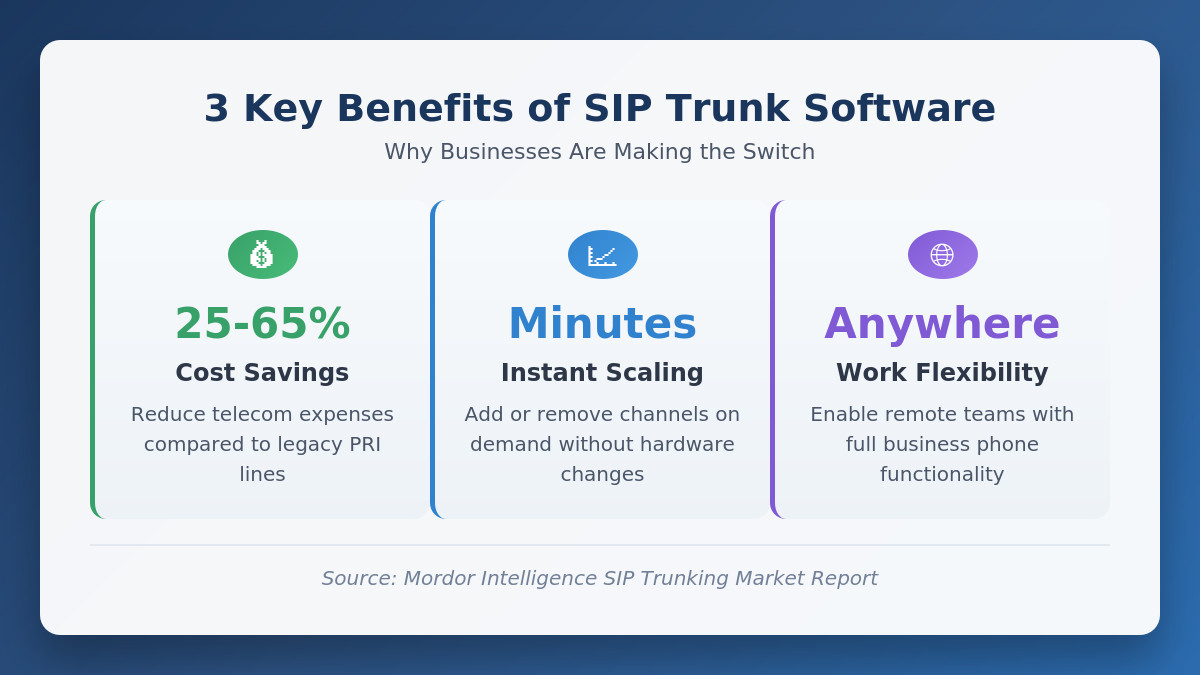
Traditional phone systems carry multiple expense categories that SIP trunking eliminates or reduces. Hardware installation costs disappear when virtual trunks replace physical lines. Long-distance and domestic calling expenses decrease because voice traffic travels over existing internet connections rather than metered telephone networks. Organizations commonly report cost savings between 25% and 65% compared to legacy PRI lines when transitioning to SIP-based solutions. These savings compound over time as businesses avoid upgrade costs for aging equipment and reduce vendor management overhead.
The financial model also shifts from capital expenditure to operational expenditure. Rather than purchasing expensive PBX hardware that depreciates over years, businesses pay predictable monthly fees based on actual usage. This approach improves cash flow and makes communication costs more transparent for budgeting purposes.

Scalability That Matches Business Growth
Growth-oriented businesses often find traditional phone systems constraining. Adding capacity requires ordering new lines from carriers, waiting for installation appointments, and potentially upgrading on-premises equipment. SIP trunk software eliminates these friction points by allowing capacity adjustments through administrative interfaces.
Seasonal businesses benefit from this flexibility. Retailers can add channels before holiday shopping periods and scale back during slower months without maintaining unused capacity year-round. Call centers can respond to unexpected volume spikes by provisioning additional SIP trunk channels within minutes rather than days. This elasticity transforms telecommunications from a fixed cost into a variable expense that aligns with actual business activity.
Unified Communications Integration
Modern SIP trunking software serves as the foundation for unified communications strategies that combine voice, video, messaging, and collaboration tools. Rather than managing separate systems for different channels, businesses can route all interactions through integrated platforms. Employees access the same phone number whether they are working from office desks, home offices, or mobile devices. Customer interactions flow seamlessly between channels, with context preserved throughout the conversation.
This integration supports the distributed work arrangements that have become standard across industries. Teams collaborate effectively regardless of physical location, and organizations maintain professional presence even when staff members work remotely. The underlying SIP infrastructure makes these capabilities possible while remaining largely invisible to end users.
What Should You Look for When Evaluating SIP Providers?
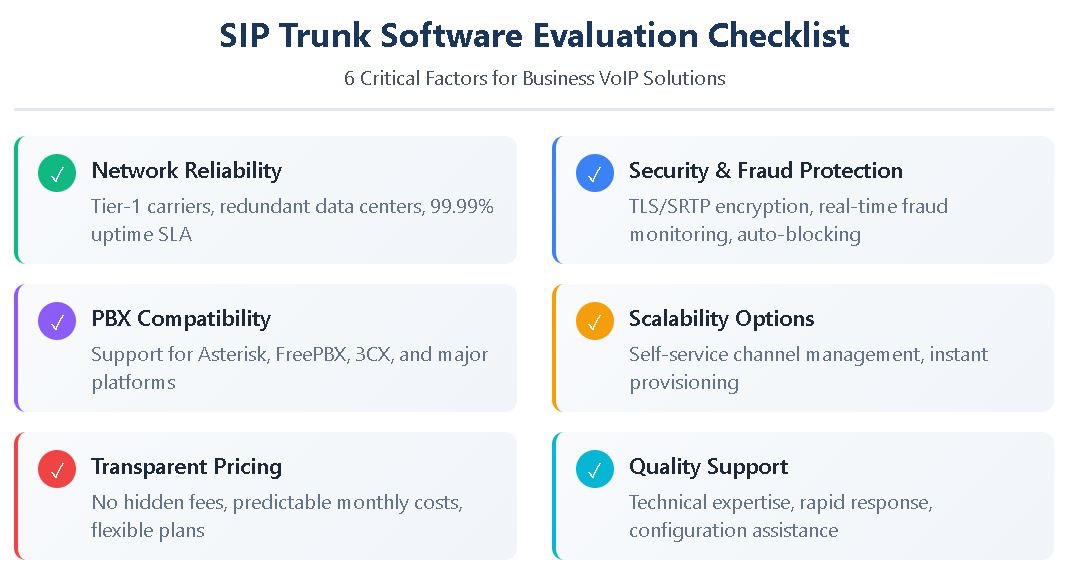
Selecting the right SIP trunk software requires examining factors beyond basic feature lists. The following criteria help organizations identify providers capable of supporting long-term communication needs.
Reliability and Network Architecture
Uptime guarantees matter, but understanding how providers achieve reliability matters more. Quality SIP providers maintain redundant data centers across multiple geographic regions, ensuring that localized outages do not disrupt service. They partner with Tier-1 carriers for voice routing, which typically delivers better call quality than budget alternatives relying on lower quality upstream connections.
Ask potential providers about their network architecture, including where media servers are located and how calls are routed during failure scenarios. Organizations with mission-critical communication needs should verify that providers offer service level agreements with meaningful remedies rather than marketing promises without accountability.
Security and Fraud Protection
Voice traffic faces security threats that many organizations underestimate. Toll fraud, where attackers gain unauthorized access to place expensive calls, costs businesses billions annually. Effective SIP trunking software includes multiple layers of protection: encryption for signaling and media streams, real-time monitoring for suspicious calling patterns, and automatic blocking when anomalies are detected.
Evaluate how providers handle security incidents and what visibility they offer into potential threats. Some solutions include international call fraud protection that monitors calling patterns and automatically disables compromised trunks while alerting administrators. These proactive measures prevent significant financial losses and operational disruptions.
Support Quality and Responsiveness
Technical issues with voice communications demand rapid response. Evaluate provider support options carefully, including availability hours, escalation procedures, and whether support staff possess technical expertise or merely follow scripts. Organizations with limited internal telecom expertise should prioritize providers offering assisted configuration and ongoing technical guidance.
Request references from existing customers with similar requirements, and ask specifically about support experiences during incidents. The quality of support often differentiates providers more than minor feature differences, particularly when problems arise outside normal business hours.
Transparent Pricing Structures
VoIP for business should deliver predictable costs, but some providers complicate pricing with hidden fees, minimum commitments, or charges for basic features. Effective evaluation requires understanding the total cost of ownership, including per-channel fees, DID number charges, usage rates for calls outside unlimited bundles, and any regulatory recovery fees.
Providers offering straightforward pricing models that align costs with actual usage typically deliver better long-term value than those with complex rate structures requiring careful monitoring to avoid unexpected charges.
How Do Modern Business Communication Tools Drive Productivity?
Beyond cost reduction, SIP software enables capabilities that directly impact workforce productivity and customer experience.

Supporting Remote and Hybrid Workforces
The expectation that employees can work effectively from any location has become standard across most industries. Quality SIP trunk software supports this flexibility by extending business phone functionality to any device with internet connectivity. Employees answer calls to their office extensions from home computers, tablets, or smartphones without revealing personal phone numbers to customers.
Presence features allow colleagues to see availability status before initiating calls, reducing interruptions and unsuccessful contact attempts. Call forwarding rules route communications based on time of day, employee status, or caller characteristics, ensuring that important calls reach the right people regardless of where they are working.
Advanced Analytics for Better Decisions
Data-driven management requires visibility into communication patterns. Modern SIP trunk software captures detailed call records that reveal how teams interact with customers and each other. Managers can identify peak calling periods for staffing optimization, track response times for customer service improvement, and analyze call duration patterns to refine processes.
Some platforms incorporate artificial intelligence capabilities that automatically transcribe calls, detect customer sentiment, and summarize conversations. These features transform voice communications from ephemeral interactions into searchable, analyzable data assets that inform business strategy.
Integration with Business Systems
Effective business VoIP solutions connect with the applications teams already use. Integration with customer relationship management platforms automatically displays caller information when calls arrive, allowing representatives to personalize interactions without asking customers to repeat information. Click-to-dial functionality from within CRM interfaces eliminates manual number entry and automatically logs call activities.
Microsoft Teams integration has become particularly important as organizations standardize on that platform for collaboration. SIP software with direct routing capabilities allows Teams to serve as the primary business phone interface while maintaining connection to the public telephone network for external calls.
Frequently Asked Questions
What is the difference between SIP trunking and traditional phone lines?
Traditional phone lines use physical copper wiring to connect calls through the public switched telephone network, requiring dedicated infrastructure for each line. SIP trunking transmits voice as digital data over internet connections, eliminating physical line requirements and enabling features like instant scalability, geographic flexibility, and integration with other communication platforms.
How many SIP trunk channels does my business need?
The number of channels depends on your concurrent call requirements. Each channel supports one active call, whether inbound or outbound. Analyze your peak calling periods to determine maximum simultaneous call volume, then add some buffer capacity for growth. Many businesses start with channels equal to their current phone lines and adjust based on actual usage patterns visible through call analytics.
Can SIP trunk software work with my existing phone system?
Most modern SIP trunk software supports a wide range of IP-PBX systems, including open-source options like Asterisk and FreePBX as well as commercial platforms from manufacturers like Cisco, Avaya, and Yeastar. For legacy analog systems, SIP-to-analog gateways can bridge the connection. Confirm compatibility with potential providers before implementation to ensure seamless integration.
Is SIP trunking secure for business communications?
Reputable SIP trunk providers implement multiple security measures, including TLS encryption for signaling, SRTP encryption for voice media, and fraud detection systems that monitor for suspicious calling patterns. Businesses should verify that providers offer these protections and implement their own security practices, including strong authentication for SIP accounts and regular monitoring of call activity for anomalies.
Take Your Communications to the Next Level
The transition from legacy phone systems to modern SIP trunking is a strategic opportunity for businesses seeking better communication infrastructure. Organizations that invest in capable platforms position themselves to reduce costs, scale efficiently, and deliver the experiences that customers and employees expect.
Evaluating options requires balancing immediate requirements against future growth potential. The features outlined in this guide provide a framework for assessment, but every organization’s priorities differ based on industry, size, and operational complexity. What remains consistent is that SIP trunking has evolved into essential business infrastructure.
SIP.US delivers the reliability, features, and support that growing businesses need from their SIP providers. With a powerful control panel, Tier-1 network redundancy, and straightforward pricing, organizations can modernize their communications without complexity. Get started today and experience the difference that purpose-built SIP trunk software makes for seamless business communication.

Mitch leads the Sales team at BCM One, overseeing revenue growth through cloud voice services across brands like SIPTRUNK, SIP.US, and Flowroute. With a focus on partner enablement and customer success, he helps businesses identify the right communication solutions within BCM One’s extensive portfolio. Mitch brings years of experience in channel sales and cloud-based telecom to every conversation.
Free SIP Trunk in 60 Seconds
Related Posts

SIP vs VoIP: What’s the Difference and What Do You Need?
Understanding SIP vs VoIP is essential for any business looking to modernize its communications without…
Read More
Best Business Phone System for Small Businesses in 2026
Small businesses selecting their phone system in 2026 face an environment where cloud-based solutions have…
Read More
VoIP for Medical Offices: What to Know About Phone Systems
Medical practices using VoIP phone systems see up to 50% cost savings while ensuring HIPAA…
Read More