

Business SIP Line: What It Is and Why It Matters
Business SIP lines are transforming how small companies communicate.
- A business SIP line is a virtual phone connection that uses your internet to deliver voice, video, and messaging without traditional copper wiring.
- Companies switching to SIP trunk lines report savings on telecommunications costs while gaining instant scalability.
- SIP adoption has reached 65% among North American businesses, with the market projected to hit $177.84 billion by 2032.
Small businesses seeking flexible, cost-effective communication should evaluate SIP trunking as a replacement for legacy phone systems.
How do small businesses maintain professional, reliable communication without draining their budget on outdated phone systems? The answer points to SIP trunking technology.
A business SIP line is a shift from physical telephone infrastructure to virtual communication channels. SIP stands for Session Initiation Protocol, which is the standard method for establishing, maintaining, and terminating voice calls over the internet. Rather than relying on copper wiring that connects your office to the telephone company’s central office, a SIP line transmits voice data as packets across your existing broadband connection.
Approximately 65% of companies in North America have adopted SIP trunking as part of their communication strategy. This widespread adoption reflects growing confidence in the technology’s reliability and the compelling business case for making the switch.
What Is a Business SIP Line?
Understanding what is business SIP requires examining how traditional telephony works. Conventional phone service relies on Primary Rate Interface (PRI) lines, which are physical circuits connecting your business to the public telephone network. Each PRI line supports 23 simultaneous calls and requires dedicated hardware installation at your premises.
SIP lines for business operate differently. Instead of physical circuits, your IP-enabled phone system connects through your internet service to a SIP trunk provider. The provider maintains the connection to the public telephone network on your behalf. When someone dials your business number, the call routes through the internet to your phone system rather than through dedicated copper lines.
This difference creates operational advantages. Adding capacity with traditional phone service requires ordering new physical lines, scheduling technician visits, and waiting weeks for installation. With SIP trunk lines, you can add channels through your provider’s online portal in minutes. The same flexibility applies when reducing capacity during slower periods.
What makes SIP lines particularly valuable for small businesses is their versatility. A single SIP line can handle voice calls, video conferencing, instant messaging, and fax transmissions. This consolidation eliminates the need to manage separate services and vendors for each communication channel. Your phone system, video meetings, and team messaging can all flow through the same infrastructure.
How Do SIP Trunk Lines Actually Work?
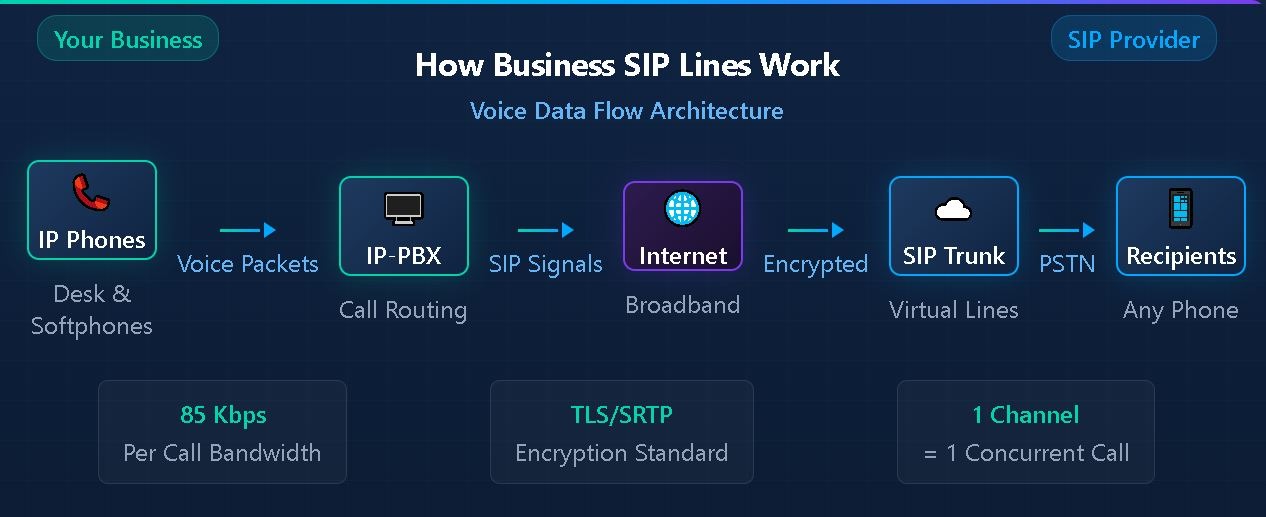
The technical operation of SIP trunk lines involves several components working together. Your business needs an IP-enabled Private Branch Exchange (PBX) system, which serves as the hub for internal phone extensions and call routing. The PBX connects through your internet service to your SIP trunk provider’s network infrastructure.
When an employee places an outbound call, the PBX converts the voice signal into digital data packets. These packets travel through your internet connection to the SIP provider’s servers. The provider then routes the call to its destination, whether that destination uses traditional phone service or another VoIP system. For inbound calls, the process reverses.
What Is the Relationship Between SIP Lines and SIP Trunks?
The terminology can create confusion for business owners researching their options. A SIP trunk is the overall connection between your phone system and your provider. It’s the virtual equivalent of the physical line connecting your building to the telephone network. A SIP line, sometimes called a channel, represents a single concurrent call path within that trunk.
If your business regularly has five employees on calls simultaneously, you need at least five SIP channels. The standard calculation suggests one channel for every three to four employees, though businesses with heavy call volumes may need higher ratios. The ability to match your channel count precisely to your actual usage is one of the key advantages over traditional phone service, where you purchase capacity in fixed increments.
Most SIP providers offer flexible packages where you can adjust your channel count as needs change. This scalability proves valuable for seasonal businesses, growing companies, and organizations with fluctuating call volumes.
What Components Make Up a Business SIP System?
Implementing SIP trunk lines requires several core components. Your existing internet connection forms the foundation, though you may need to verify that it provides sufficient bandwidth. Each concurrent call consumes approximately 85 kilobits per second in each direction when using the standard G.711 codec. A business with ten simultaneous calls needs roughly 1.7 megabits of dedicated bandwidth for voice traffic.
Quality of Service (QoS) configuration on your network ensures voice packets receive priority over other data traffic. Without proper QoS settings, large file downloads or video streaming can interfere with call quality, causing choppy audio or dropped connections.
The PBX system handles call routing, voicemail, auto-attendants, and other advanced features. Modern IP-PBX options range from on-premises hardware to cloud-hosted solutions. Many small businesses find that software-based PBX platforms running on standard server hardware provide excellent functionality without the cost of proprietary telephone equipment.
Why Are Small Businesses Switching to SIP Lines for Business?
The case for SIP lines for business centers on three primary advantages: cost reduction, operational flexibility, and enhanced capabilities. Each factor carries significant weight for small businesses operating with limited resources and staff.
What Cost Savings Can Businesses Expect?
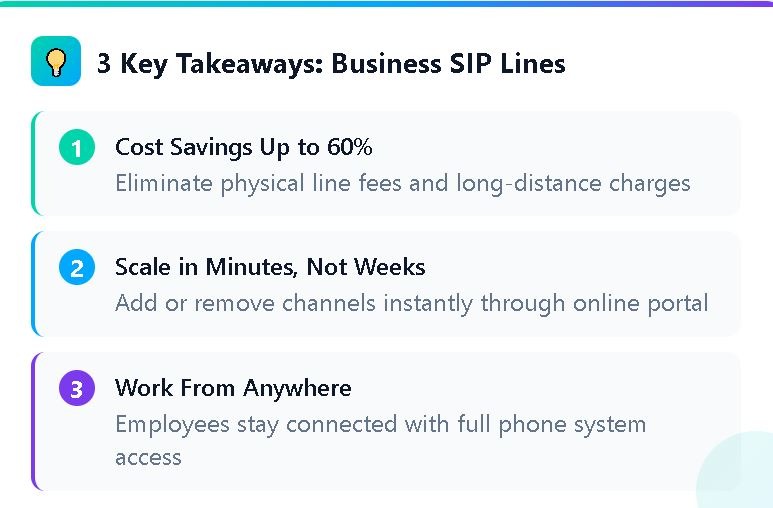
Financial considerations drive most SIP adoption decisions.Businesses switching from traditional phone systems to VoIP services can reduce telecommunications costs by up to 60%. The savings accumulate from several sources.
First, SIP eliminates the recurring fees for physical phone lines. Traditional service typically costs $25–40 per line monthly, while SIP channels often run $15–25 per channel for unlimited domestic calling. A business with 20 phone lines could save hundreds monthly from this difference alone.
Second, long-distance charges largely disappear. SIP providers typically include unlimited calling to the continental United States and Canada in their base pricing. Businesses making frequent long-distance calls see immediate and substantial savings.
Third, hardware and maintenance costs decline. SIP works with existing network infrastructure rather than requiring separate telephone wiring. When you add employees, they need only a desk phone or softphone application rather than a new physical line installation.
How Does SIP Enable Business Scalability?
Growth creates communication challenges that SIP addresses elegantly. Adding phone capacity in a traditional environment requires planning weeks ahead, coordinating with the phone company, and scheduling installation appointments. Growing businesses often find themselves capacity-constrained during critical expansion periods.
SIP trunk lines scale instantly. Through your provider’s control panel, you can add channels and phone numbers in minutes. If you open a new location, remote employees can receive company phone numbers regardless of their physical location. The system treats all connections equally, whether the user sits in your main office, works from home, or operates from a client site.
This flexibility extends to downsizing as well. Seasonal businesses can reduce capacity during slow periods rather than paying year-round for peak-season infrastructure. The ability to match costs precisely to current needs helps maintain healthy margins through business cycles.
What Advanced Features Come with Business SIP Lines?
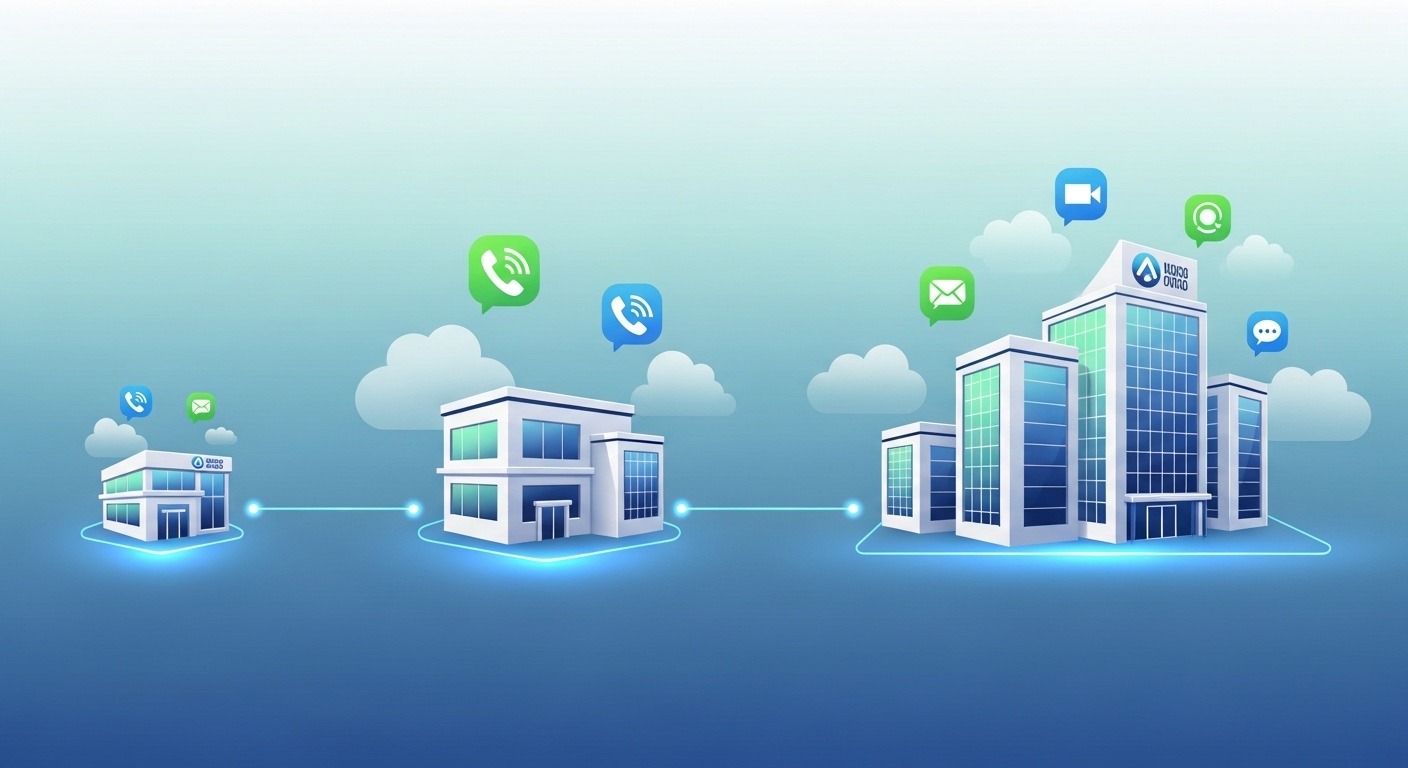
Modern SIP trunk features include far more than basic calling. Unified communications capabilities integrate voice, video, messaging, and presence information into cohesive platforms. Employees can see colleague availability, initiate calls with a click, and transition seamlessly between communication modes.
Integration with business applications adds further value. SIP systems commonly connect with customer relationship management platforms, enabling screen pops that display caller information before you answer. Call logging, recording, and analytics provide insights for improving customer service and sales performance.
Mobile integration keeps remote and traveling employees connected. Softphone applications on smartphones and tablets allow staff to make and receive calls on their business numbers from anywhere with internet access. Customers reach the same professional phone system whether your team works from the office or from home.
What Should You Consider When Evaluating SIP Trunk Lines?
Selecting a SIP provider requires examining several factors beyond pricing. The quality and reliability of your communications depend on choosing a partner whose capabilities match your business requirements.
How Important Is Provider Reliability?
Uptime matters enormously for business communications. Missed calls mean missed opportunities, frustrated customers, and damaged relationships. Evaluate providers based on their network architecture and redundancy provisions.
Quality providers maintain multiple data centers in geographically diverse locations. If one facility experiences problems, calls automatically route through alternate paths. Look for Tier-1 network connections that ensure your calls travel over premium carrier infrastructure rather than lower-quality routes.
Failover capabilities protect against local outages. Advanced SIP implementations can automatically forward calls to backup numbers, mobile phones, or secondary locations if your primary connection fails. These features provide business continuity that traditional phone service rarely matches.
What Security Measures Protect SIP Communications?
Voice communications require protection from interception and fraud. Legitimate security concerns have led modern SIP providers to implement robust protective measures.
Encryption using Transport Layer Security (TLS) and Secure Real-time Transport Protocol (SRTP) prevents eavesdropping on calls. The encryption covers both signaling information and the actual voice content.
Fraud protection systems monitor for suspicious calling patterns that indicate compromised systems. International toll fraud, where attackers hijack phone systems to place expensive overseas calls, costs businesses billions annually. Effective fraud detection identifies unusual activity and can automatically disable international calling before significant charges accumulate.

How Do You Determine Channel Requirements?
Right-sizing your SIP trunk configuration prevents both wasted spending and capacity shortages. Start by analyzing your current usage patterns. How many simultaneous calls does your business typically handle? What are your peak calling periods?
The general guideline of one channel per three to four employees works for organizations with average call volumes. Call centers, sales teams, and customer service departments typically need higher ratios. Some providers offer metered pricing where you pay per minute rather than per channel, which may suit businesses with unpredictable or low call volumes.
Consider growth projections when establishing your initial configuration. While SIP scales easily, starting with adequate capacity prevents potential service issues during unexpectedly busy periods.
Five Key Benefits of Business SIP Lines
Understanding the core advantages helps clarify whether SIP suits your business situation.
- Predictable Monthly Costs – Fixed per-channel pricing eliminates surprise bills from long-distance charges or overage fees, simplifying budgeting and financial planning.
- Location Independence – Employees work effectively from any location with internet access while maintaining full access to business phone system features and their regular extensions.
- Rapid Deployment – New locations, remote workers, and capacity increases become operational in minutes rather than the weeks required for traditional phone service installation.
- Unified Communications – Voice, video, messaging, and collaboration tools integrate into cohesive platforms that improve productivity and customer experience.
- Future-Ready Infrastructure – SIP positions your business to adopt emerging communication technologies as they become available, protecting your infrastructure investment.
How Do You Implement SIP Lines?
Transitioning to SIP trunk lines follows a structured process. Proper preparation prevents problems and ensures a smooth migration from your existing phone system.
What Pre-Implementation Steps Matter Most?
Begin with an assessment of your current internet service. Measure available bandwidth during peak usage periods and compare against the requirements for your anticipated call volume. Upgrading internet service before implementing SIP prevents quality issues that undermine user confidence.
Verify that your phone system supports SIP connectivity. Most modern PBX systems include SIP trunk ports, but older equipment may require gateway devices to bridge traditional telephone connections to IP networks. Your provider can often assist with compatibility assessment.
Configure Quality of Service settings on your network equipment to prioritize voice traffic. This configuration ensures that large data transfers don’t degrade call quality during busy periods.
What Does the Migration Process Involve?
The actual transition typically happens in stages rather than as an abrupt switchover. Most businesses run SIP in parallel with their existing service during an initial testing period. This approach allows thorough validation before committing fully.
Number porting transfers your existing phone numbers from your current carrier to your SIP provider. The porting process takes several days to several weeks, depending on your current carrier and the complexity of your number assignments. Plan this timeline carefully to avoid service gaps.
Staff training ensures employees understand any changes to the phone operation. While SIP phones work similarly to traditional phones, features like voicemail access, call transfer, and conference calling may function differently than your previous system.

Frequently Asked Questions About Business SIP Lines
What internet speed do I need for SIP trunk lines? Each concurrent call requires approximately 85 kilobits per second of bandwidth in each direction using standard codecs. A business expecting 10 simultaneous calls should have at least 2 megabits of dedicated bandwidth for voice, plus headroom for data usage. Most modern business internet connections easily support SIP requirements.
What happens if my internet connection fails? Quality SIP implementations include failover provisions that route calls to backup numbers, mobile phones, or alternate locations during outages. Some providers also offer automatic call forwarding to PSTN numbers when primary connections become unavailable. These features provide business continuity protection.
Do I need to replace my existing phones? That depends on your current equipment. Modern IP phones work directly with SIP service. Traditional analog phones can connect through adapter devices that convert signals between formats. Many businesses use the transition as an opportunity to upgrade equipment, but immediate replacement isn’t always necessary.
How does call quality compare to traditional phone service? Most users find SIP call quality equals or exceeds traditional phone service when properly configured. The key factors are adequate bandwidth, correct QoS settings, and a reliable provider. Network problems can affect quality, making proper implementation crucial.
Upgrade Your Business Communications Today
The shift toward SIP-based communication continues accelerating as businesses recognize the combination of cost savings, flexibility, and advanced features the technology delivers. Small businesses particularly benefit from capabilities that were previously available only to large enterprises with substantial telecommunications budgets.
SIP.US provides the reliable, scalable SIP trunking infrastructure that growing businesses need. With instant provisioning, comprehensive pricing options, and integration support for popular PBX platforms, transitioning to modern business communications has never been simpler. Get started with a free trial and discover how SIP trunk lines can transform your business communications.

Mitch leads the Sales team at BCM One, overseeing revenue growth through cloud voice services across brands like SIPTRUNK, SIP.US, and Flowroute. With a focus on partner enablement and customer success, he helps businesses identify the right communication solutions within BCM One’s extensive portfolio. Mitch brings years of experience in channel sales and cloud-based telecom to every conversation.
Free SIP Trunk in 60 Seconds
Related Posts

How to Become a VoIP Reseller
The VoIP reselling opportunity has never been stronger, with the global market projected to reach…

SIP Trunking vs VoIP: What’s the Difference and Which Should You Choose?
Discover what is the difference between SIP trunking and VoIP. Learn their definitions, features, and benefits for business communication.
SIP vs PBX: Which One Works Best for Your Business?
Choosing the right phone system can determine whether your business communicates efficiently or struggles with…