

Cost-Effective SIP Trunking for Small Businesses
Communication technology decisions can make or break a small business. How quickly can you capture these benefits?
- Poor communication costs businesses $1.2 trillion annually, with individual companies losing $10,000–$55,000 per employee each year.
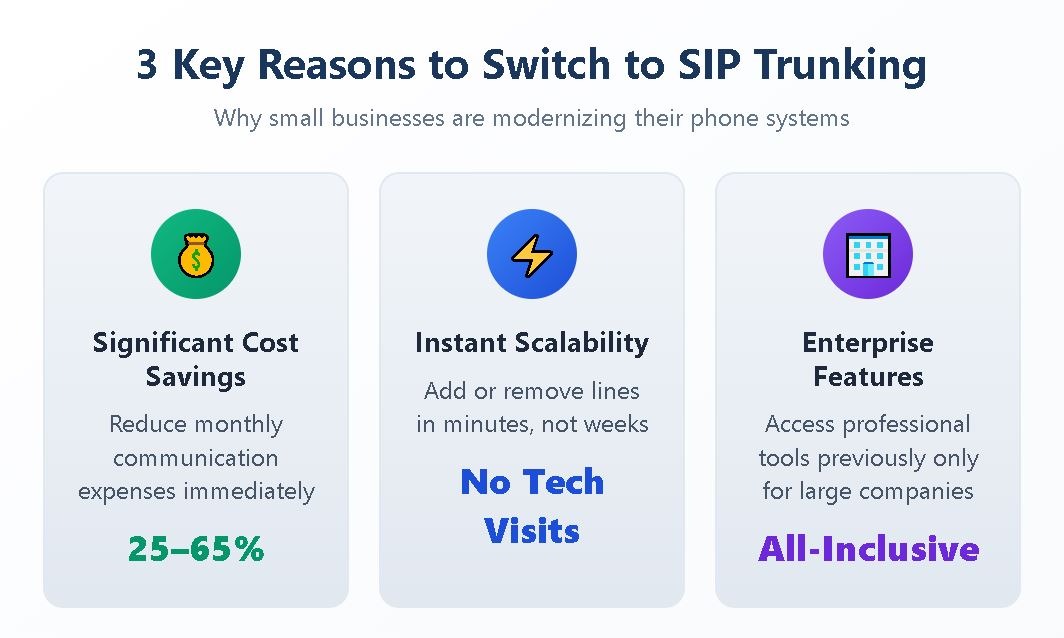
- Small businesses switching to VoIP and SIP trunking report savings between 25% and 65% on communication expenses.
- Most small businesses now use VoIP technology, with adoption accelerating through 2026.
- Cloud-based communication solutions eliminate hardware costs while delivering enterprise-grade features.
If your business still relies on traditional phone lines or struggles with communication inefficiencies, investing in modern voice technology may be the smartest infrastructure decision you make this year.
Small business owners understand the weight of every decision. Each dollar spent needs to deliver measurable returns, and communication infrastructure is often a high recurring expense that many owners never think to question. Meanwhile, ineffective communication quietly drains productivity, frustrates customers, and costs more than most realize.
U.S. companies collectively lose $1.2 trillion annually due to poor communication. For individual businesses, the cost ranges from $10,000 to $55,000 per employee each year in lost productivity, missed opportunities, and customer churn. Communication infrastructure deserves serious attention.
SIP trunking for small businesses is the practical solution to this challenge. This technology replaces expensive traditional phone lines with internet-based voice services that deliver clearer calls, lower costs, and features previously available only to large enterprises. Understanding how this technology works and what it offers can help small business owners make informed decisions about their communication future.
What Is SIP Trunking for Small Businesses?
Session Initiation Protocol trunking changes how businesses connect to the telephone network. Instead of relying on physical copper lines that require expensive installation and maintenance, SIP trunking transmits voice calls as digital data packets over your existing internet connection. The result is a more flexible, cost-effective, and feature-rich communication system.
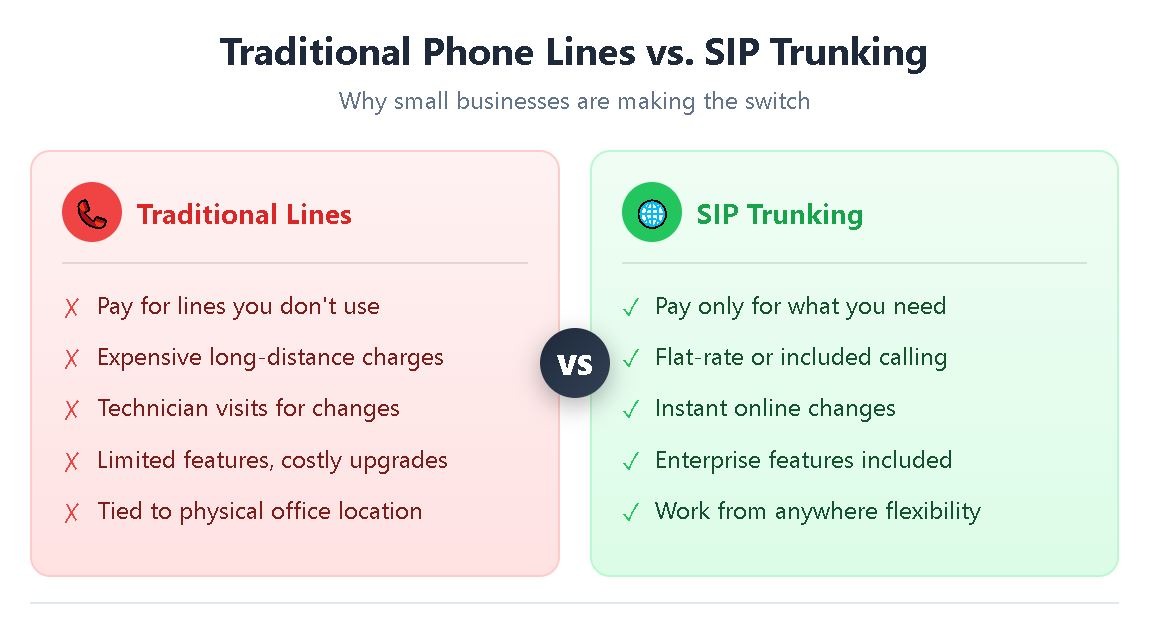
Traditional phone systems force businesses to pay for physical infrastructure whether they use it or not. A small business with ten employees might pay for twenty phone lines “just in case,” even if peak usage never exceeds eight simultaneous calls. SIP trunking eliminates this waste by allowing businesses to add or remove channels instantly based on actual needs. No technician visits, no installation delays, and no paying for capacity you don’t use.
The technology works with most existing phone systems, which means businesses can often preserve their current hardware investments while gaining access to modern capabilities. For companies using older equipment, affordable adapter devices bridge the gap between legacy systems and internet-based voice services.
Why Are Communication Cost Reductions So Significant?
The financial benefits of SIP trunking for small businesses extend beyond per-minute savings. Traditional phone systems come with hidden costs that add up quickly: line rental fees, long-distance charges, maintenance contracts, and equipment upgrades. SIP trunking grants communication cost reductions by consolidating these expenses into predictable monthly bills while eliminating most of the underlying costs.
Businesses making the switch typically report savings between 25% and 65% on their monthly communication expenses. The exact figure depends on current spending patterns and usage volume, but nearly every organization sees meaningful reductions within the first billing cycle.
Beyond direct cost savings, SIP trunking delivers productivity gains that compound over time. Businesses using VoIP systems save an average of 32 minutes per employee per day. These minutes add up to hours of productive time each week, enabling teams to focus on work that actually grows the business rather than fighting with outdated communication tools.
How Does Technology Transform Small Business Communication?
The role of technology in business communication has expanded. Modern communication systems do far more than make and receive phone calls. They integrate with customer relationship management software, provide detailed analytics on call patterns, support video conferencing, and enable team collaboration across any device or location.
Social media platforms, email marketing tools, and instant messaging applications all play important roles in reaching customers. However, voice communication remains the preferred method for customers contacting businesses, with phone calls leading all other channels. This reality makes phone system quality and reliability essential, regardless of how many digital channels a business maintains.
What Makes VoIP Essential for Small Business Success?
Voice over Internet Protocol technology has moved from early adoption to mainstream necessity. The global VoIP market reached approximately $193 billion in 2025 and continues growing at a compound annual growth rate exceeding 13%. The majority of small businesses now use VoIP, drawn by its affordability, scalability, and feature richness compared to traditional phone systems.
For small businesses specifically, affordable VoIP eliminates the traditional barriers to professional-grade communication. Features like auto-attendants, call routing, voicemail-to-email, and conference calling come standard with most VoIP services. These capabilities help small businesses project a professional image and deliver customer experiences that rival much larger competitors.
The timing makes sense given workforce realities. Remote and hybrid work arrangements have become standard, with millions of workers splitting time between home and office. VoIP for small businesses enables seamless communication regardless of where employees happen to be working on any given day. The same phone number, the same features, and the same professional presence follow workers wherever they go.
What Video Conferencing Capabilities Support Modern Teams?
Tools enabling virtual face-to-face meetings eliminate the need for costly travel while fostering stronger relationships with customers, partners, and remote team members. Modern SIP systems integrate directly with video conferencing platforms, creating unified communication environments where voice, video, and messaging work together seamlessly.
Teams can quickly transition from phone conversations to video meetings when visual communication adds value. Screen sharing, document collaboration, and real-time whiteboarding happen naturally within the same platform. For small businesses competing against larger organizations, these capabilities level the playing field.
What Communication Tools Do Small Businesses Actually Need?
Selecting the right communication tools requires balancing functionality against complexity and cost. Small businesses benefit most from solutions that address their specific needs without overwhelming them with enterprise features they’ll never use.

Why Does a Reliable Phone System Matter Most?
A reliable, professional phone system forms the foundation of business communication. When customers call and reach voicemail, encounter poor audio quality, or struggle to navigate confusing menu systems, they form negative impressions that damage relationships. First impressions often happen over the phone, making system reliability a genuine competitive factor.
Modern phone systems deliver clearer audio quality, more reliable connections, and access to features that traditional systems can’t match. Call forwarding, simultaneous ring on multiple devices, and seamless transfer between desk phones and mobile devices become standard rather than premium options.
The economic case is equally compelling. VoIP for small businesses typically costs a fraction of traditional phone line expenses while delivering superior functionality. Businesses gain the ability to handle multiple simultaneous calls, project professional images through consistent business numbers, and access detailed call analytics that inform better business decisions.
How Do Fax Services Still Serve Business Needs?
Despite digital transformation, certain industries and transactions still require fax communication. Legal documents, medical records, and some government forms continue to move via fax, making this capability important for many small businesses.
Virtual fax services modernize this necessity by eliminating physical fax machines while maintaining full functionality. Documents are sent and received through email or web portals, with digital archives replacing paper storage. For businesses that occasionally need fax capabilities, these services provide the functionality without the equipment costs or maintenance headaches.
Why Does Professional Email Remain Critical?
A professional business email address communicates credibility and helps maintain brand consistency. Email addresses using personal domains like Gmail or Yahoo work fine for individual communication, but business correspondence benefits from addresses that reinforce company identity.
Business email systems provide better organization, security, and compliance features. Separating business and personal correspondence reduces the risk of lost messages while enabling proper record retention for regulatory requirements. Modern email systems integrate with calendaring, task management, and communication platforms to create productive digital workspaces.
Five Key Benefits of Modern Communication Technology
Understanding the specific advantages helps small business owners evaluate whether upgrading makes sense for their situations. The following benefits apply consistently across businesses that make the transition to internet-based voice services.
- Significant Cost Reduction: Eliminating per-line charges, reducing long-distance fees, and consolidating multiple communication tools into unified platforms drives immediate savings. Most businesses recover their transition costs within months and continue saving indefinitely.
- Scalability Without Complexity: Adding new phone lines or features happens through online portals in minutes rather than requiring technician visits scheduled weeks in advance. Scaling down during slow periods eliminates paying for unused capacity.
- Professional Features Accessible to All: Auto-attendants, call queues, voicemail transcription, and CRM integration no longer require enterprise budgets. Small businesses access the same capabilities that large corporations use to manage customer relationships.
- Mobility and Flexibility: Employees work effectively from any location with internet access. Business phone numbers follow workers to their mobile devices without revealing personal numbers or compromising professional boundaries.
- Disaster Recovery Built In: Cloud-based systems continue operating even when physical offices cannot. Calls automatically route to mobile devices or alternate locations, maintaining business continuity during unexpected disruptions.

How Does Improved Communication Drive Business Growth?
Every customer interaction, team collaboration, and partner relationship depends on communication systems working reliably.
What Role Does Communication Play in Customer Retention?
Customer retention costs far less than customer acquisition, making every retained relationship valuable. When customers feel heard, receive prompt responses, and experience seamless interactions, they reward businesses with continued patronage and positive referrals.
Accessibility matters. Customers expect to reach businesses quickly and easily. VoIP solutions provide the flexibility to meet these expectations by enabling communication across multiple channels and ensuring calls route to available team members rather than voicemail. Features like call queuing and estimated wait times manage customer expectations during busy periods.
The technology also enables proactive communication that strengthens relationships. Automated appointment reminders, follow-up calls, and satisfaction surveys become manageable at scale. Small businesses can deliver the personalized attention that differentiates them from larger competitors while efficiently handling growing customer bases.
How Does Communication Quality Affect Business Efficiency?
Internal communication efficiency directly impacts operational performance. When information flows freely and quickly within organizations, teams make faster decisions, avoid misunderstandings, and reduce costly mistakes. Research indicates that 64% of business leaders believe effective communication increases team productivity.
Modern VoIP solutions streamline internal communication. Team members collaborate regardless of physical location, sharing screens, documents, and ideas in real time. Conference calls happen spontaneously without scheduling conference rooms or dialing into third-party services.
The data generated by modern phone systems provides actionable insights that inform better business decisions. Call volume patterns reveal staffing needs, average call durations indicate customer service efficiency, and missed call reports highlight opportunities for improvement. This visibility transforms communication from a cost center into a strategic asset.
What Should Small Businesses Consider When Choosing Communication Solutions?
Selecting the right communication solution requires evaluating several factors beyond simple price comparisons. The best choice balances current needs against future requirements while ensuring reliable service and adequate support.
Reliability and Uptime: Communication systems that fail during critical moments cost more than any monthly savings justify. Look for providers operating Tier-1 network infrastructure with redundant connections and published uptime guarantees.
Integration Capabilities: Modern businesses rely on multiple software systems that benefit from communication integration. CRM platforms, help desk software, and collaboration tools all work better when connected to phone systems.
Scalability: Business needs change over time. Choose solutions that can grow alongside your business without requiring complete system replacements or expensive upgrades.
Support Quality: Technical problems require prompt, knowledgeable assistance. Evaluate providers based on support availability, response times, and the quality of documentation and self-service resources.
Total Cost of Ownership: Look beyond monthly fees to understand all associated costs, including setup charges, per-minute rates for calls outside included areas, and fees for additional features or users.

Frequently Asked Questions About SIP Trunking for Small Business
What internet connection do I need for SIP trunking? Any broadband internet connection supports SIP trunking, including cable, DSL, T1, or Metro Ethernet. Each simultaneous call consumes approximately 85–100 Kbps of bandwidth. Most modern business internet connections easily support multiple concurrent calls without quality degradation.
How quickly can my business be up and running with SIP trunking? Most SIP trunking services provision accounts instantly after payment verification. Free trials are typically available immediately after email confirmation. Businesses can often make test calls within hours of starting the setup process.
Can I keep my existing phone numbers? Yes, existing phone numbers can transfer to SIP trunking services through a porting process. Porting typically takes 10–15 business days for standard numbers, though expedited options may be available.
Is SIP trunking secure for business communications? Modern SIP providers implement robust security measures, including encrypted connections, fraud detection systems, and authentication protocols. These protections often exceed what traditional phone systems provide.
What happens if my internet connection fails? Quality SIP providers offer failover options that route calls to backup numbers or mobile devices when primary connections fail. This redundancy ensures business continuity during internet outages.
Make the Smart Move for Your Business Communications
Finding the right communication solution requires balancing costs, features, and reliability. Small businesses deserve access to enterprise-grade capabilities without enterprise-level complexity or expense. The technology exists today to transform outdated phone systems into powerful communication platforms that support growth, improve efficiency, and reduce costs.
SIP.US specializes in delivering exactly this combination for small and medium-sized businesses. With fast setup, intuitive management tools, predictable pricing, and the flexibility to scale as your business grows, the path to better communication starts with a simple step. Get started with SIP.US and discover how modern SIP trunking can transform your business communications.

Mitch leads the Sales team at BCM One, overseeing revenue growth through cloud voice services across brands like SIPTRUNK, SIP.US, and Flowroute. With a focus on partner enablement and customer success, he helps businesses identify the right communication solutions within BCM One’s extensive portfolio. Mitch brings years of experience in channel sales and cloud-based telecom to every conversation.
Free SIP Trunk in 60 Seconds
Related Posts

Business SIP Line: What It Is and Why It Matters
Discover the benefits of a business SIP line with our comprehensive guide. Learn how it enhances communication, cuts costs, and scales with your company. Dive in now!

How to Become a VoIP Reseller
The VoIP reselling opportunity has never been stronger, with the global market projected to reach…

SIP Trunking vs VoIP: What’s the Difference and Which Should You Choose?
Discover what is the difference between SIP trunking and VoIP. Learn their definitions, features, and benefits for business communication.