

How SIP Trunking Helps Small Businesses Save on Communication Costs
Small businesses switching to SIP trunking typically reduce their telecommunication expenses by up to 50–60% compared to traditional phone systems.
- SIP trunk providers eliminate expensive PRI lines and per-minute long-distance charges that drain small business budgets.
- Flexible SIP pricing models let you pay only for the call capacity you actually use.
- A business VoIP phone system requires minimal hardware investment, cutting upfront capital costs.
If you’re still paying for traditional phone service, you’re likely overspending by thousands annually, and the switch takes days, not months.
Small business owners understand that every dollar matters. When monthly phone bills consistently eat into margins, it becomes clear that traditional telecommunications infrastructure wasn’t designed with lean operations in mind. SIP trunk providers offering internet-based calling have created genuine opportunities for cost reduction without sacrificing call quality or reliability.
The global VoIP market is projected to reach $326.27 billion by 2032, driven by businesses seeking cost-effective communication alternatives. SIP trunking converts voice signals into data packets transmitted over your existing internet connection, replacing the physical copper lines that have defined business telephony for decades.
For small businesses operating with limited IT resources and tight budgets, this technology shift translates directly into measurable savings. Understanding exactly where those savings come from helps business owners make informed decisions about their communication infrastructure.
What Makes SIP Trunk Providers a Cost-Effective Choice for Small Businesses?
Traditional phone systems require businesses to purchase capacity in fixed increments. A Primary Rate Interface (PRI) line delivers 23 voice channels regardless of whether you need three channels or twenty. You pay for the full bundle even when most lines sit idle. This mismatch between purchased capacity and actual usage is one of the most significant hidden costs in legacy telecommunications.
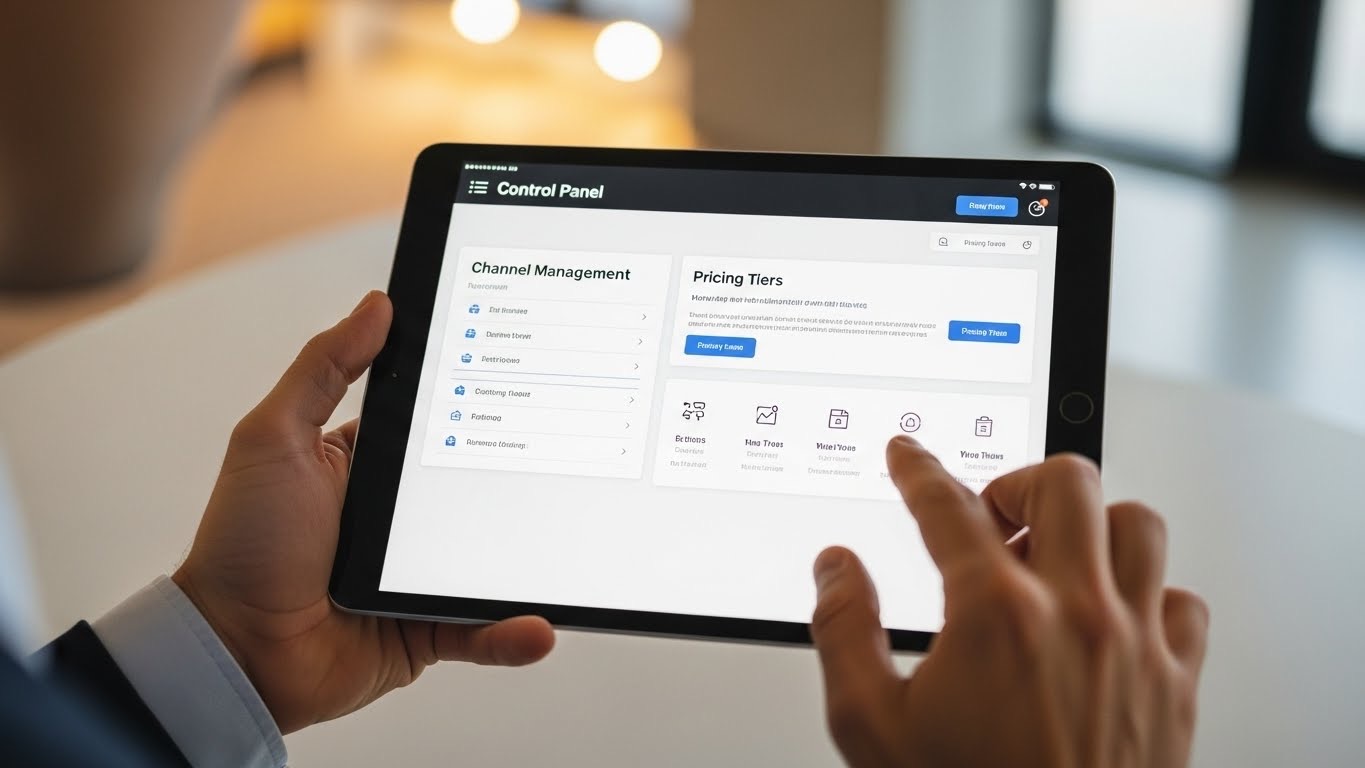
SIP trunk providers operate differently. Rather than forcing businesses into predetermined bundles, SIP trunking allows you to purchase exactly the number of channels your concurrent call volume requires. A ten-person office that rarely has more than four simultaneous calls can purchase four channels instead of committing to a full PRI circuit. When seasonal demands increase call volume, adding channels takes minutes through an online control panel rather than weeks of coordination with telephone company technicians.
This pay-for-what-you-use model changes the economics of business phone systems. Small businesses gain access to enterprise-grade communication capabilities without enterprise-level commitments, and the savings compound over time as unused capacity disappears from monthly invoices.
Where Does SIP Pricing Deliver the Biggest Savings?
The cost advantages of SIP trunking emerge from multiple sources. Understanding each category helps quantify the potential return on switching from legacy infrastructure.
Eliminating Traditional Phone Line Expenses
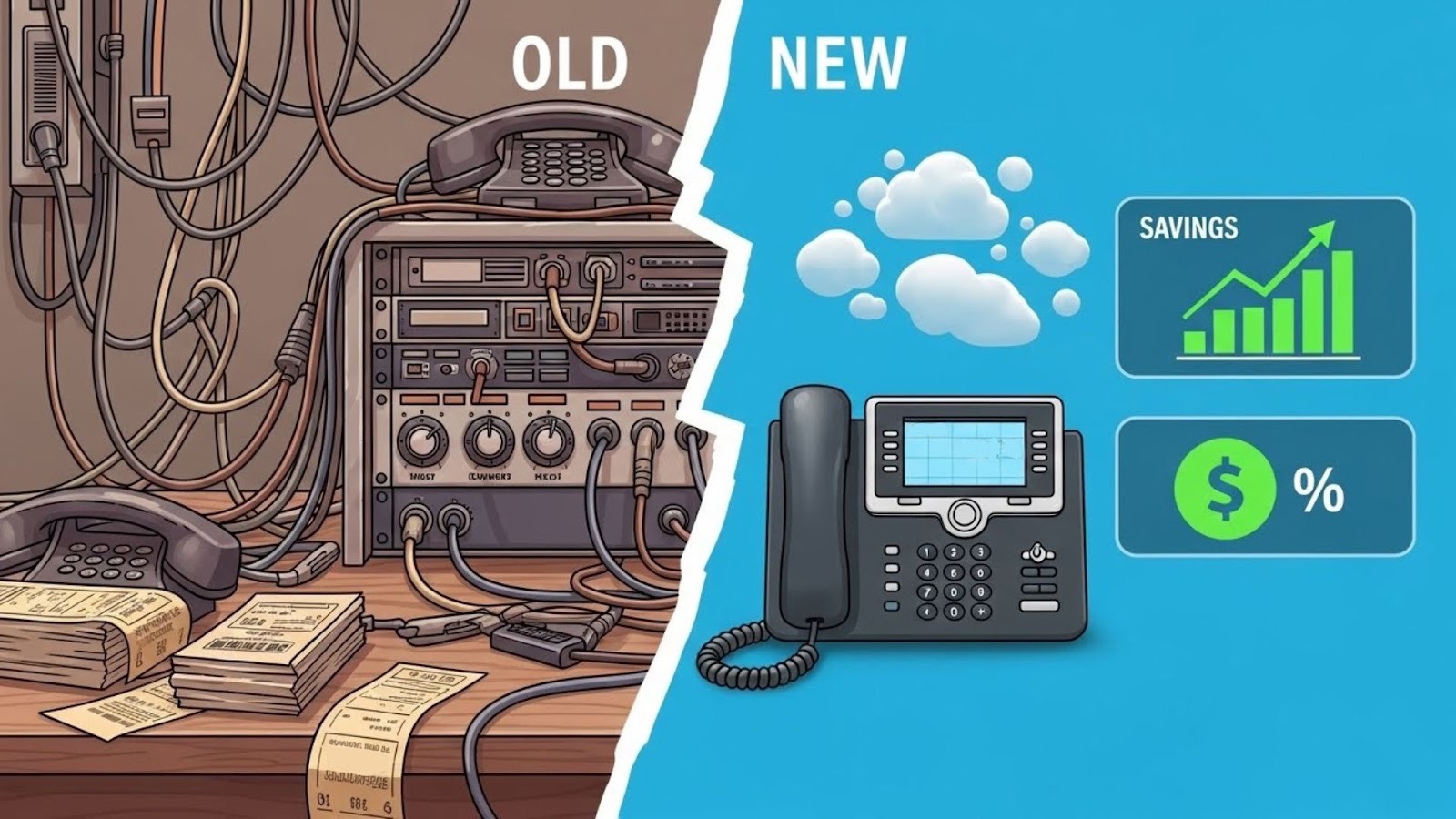
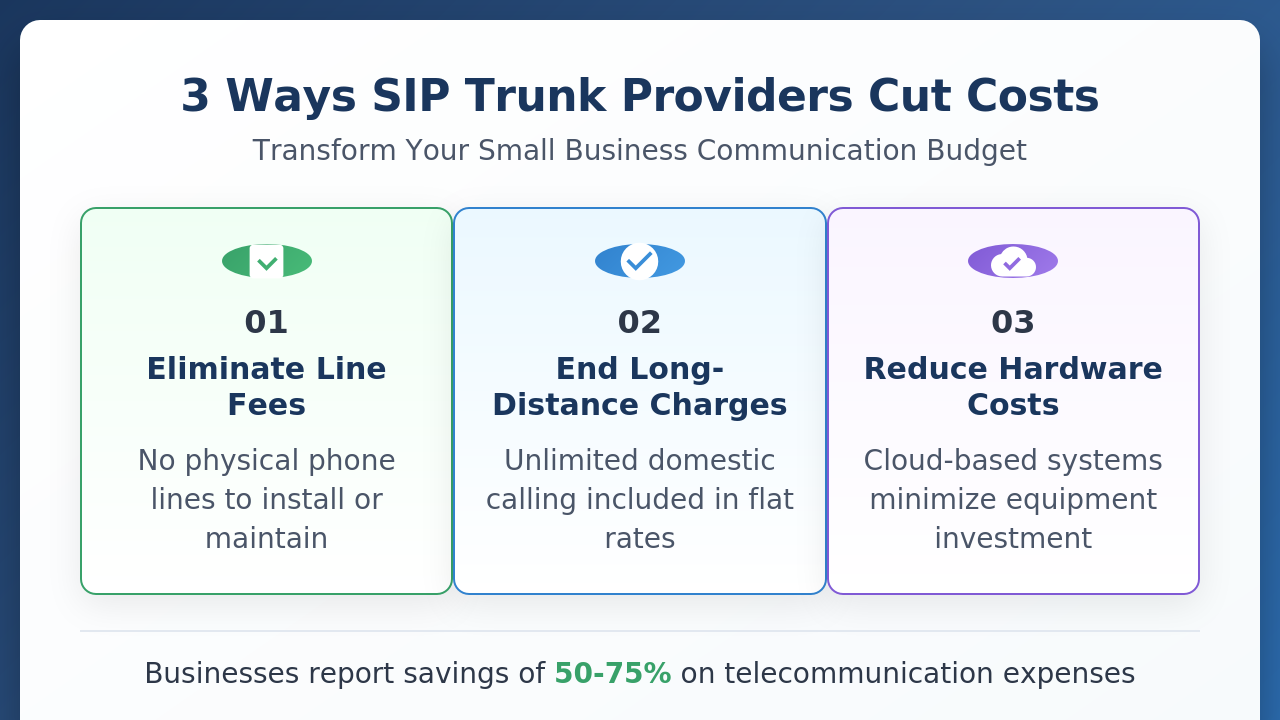
Physical phone lines carry substantial ongoing costs beyond the per-line rental fees that appear on monthly statements. Installation requires technician visits, often with associated charges for running cable and configuring equipment. Maintaining multiple lines for different purposes, such as main business numbers, fax, and dedicated lines for specific departments, multiplies these expenses.
SIP trunking consolidates all voice traffic over your existing internet connection. There are no separate physical lines to install or maintain. The infrastructure investment you’ve already made in business broadband becomes the foundation for your entire phone system, eliminating redundant monthly fees for dedicated voice circuits.
Reducing Long-Distance and Per-Minute Charges
Legacy phone systems treat distance as a cost factor. Calls traveling outside local calling areas accumulate per-minute charges that can surprise business owners at month’s end. Sales teams making dozens of daily calls to prospects across different regions generate substantial long-distance expenses under traditional pricing structures.
Most SIP pricing models include unlimited domestic calling within flat monthly rates. Businesses can budget accurately without worrying about fluctuating phone bills tied to calling patterns. For companies with customers or partners across multiple states, this predictability alone can justify the transition to a business VoIP phone system.
Lowering Hardware and Maintenance Costs
Traditional PBX systems require upfront investment in on-premises hardware. These systems demand ongoing maintenance, periodic upgrades, and eventual replacement as technology evolves. Small businesses often find themselves locked into aging equipment because replacement costs seem prohibitive.
SIP trunk providers work with your existing IP-PBX or can connect to newer cloud-based systems that minimize hardware requirements. The shift eliminates the capital expenditure that forces businesses to make large periodic investments in phone system infrastructure. Instead, operational expenses remain predictable and scale with actual business needs.
How Do Business VoIP Phone Systems Compare to Legacy Infrastructure?
When evaluating communication options, small business owners benefit from understanding the structural differences between traditional and internet-based phone systems. Businesses can expect to save around 75% on telecommunication fees by switching to SIP trunking. These distinctions explain why affordable business phone systems have gained such rapid adoption.
Cost structure: Traditional systems require purchasing capacity in fixed bundles with per-minute charges for usage beyond included allowances. SIP trunking offers channel-based pricing where you pay a flat monthly rate per concurrent call path, with most providers including unlimited domestic calling.
Scalability timeline: Adding capacity to legacy systems involves contacting providers, scheduling installations, and waiting for physical line provisioning. SIP channels can be added instantly through web-based control panels, supporting immediate response to business growth or seasonal demands.
Geographic flexibility: Physical phone lines tie your business number to a specific location. SIP trunking enables number portability and supports remote workers using the same business phone system from any location with internet access.
Maintenance responsibility: Traditional PBX systems place maintenance burden on the business, including hardware repairs and software updates. Cloud-based SIP solutions shift infrastructure management to the provider while giving businesses control over their specific configuration.
Redundancy options: Legacy systems typically offer limited failover capabilities without expensive backup circuits. Modern SIP trunk providers include built-in redundancy with automatic routing to backup destinations during outages.
What SIP Pricing Models Work Best for Small Business Budgets?
Selecting the right pricing structure depends on your calling patterns. SIP trunk providers typically offer several options designed to accommodate different business profiles.
Unlimited Channel Pricing
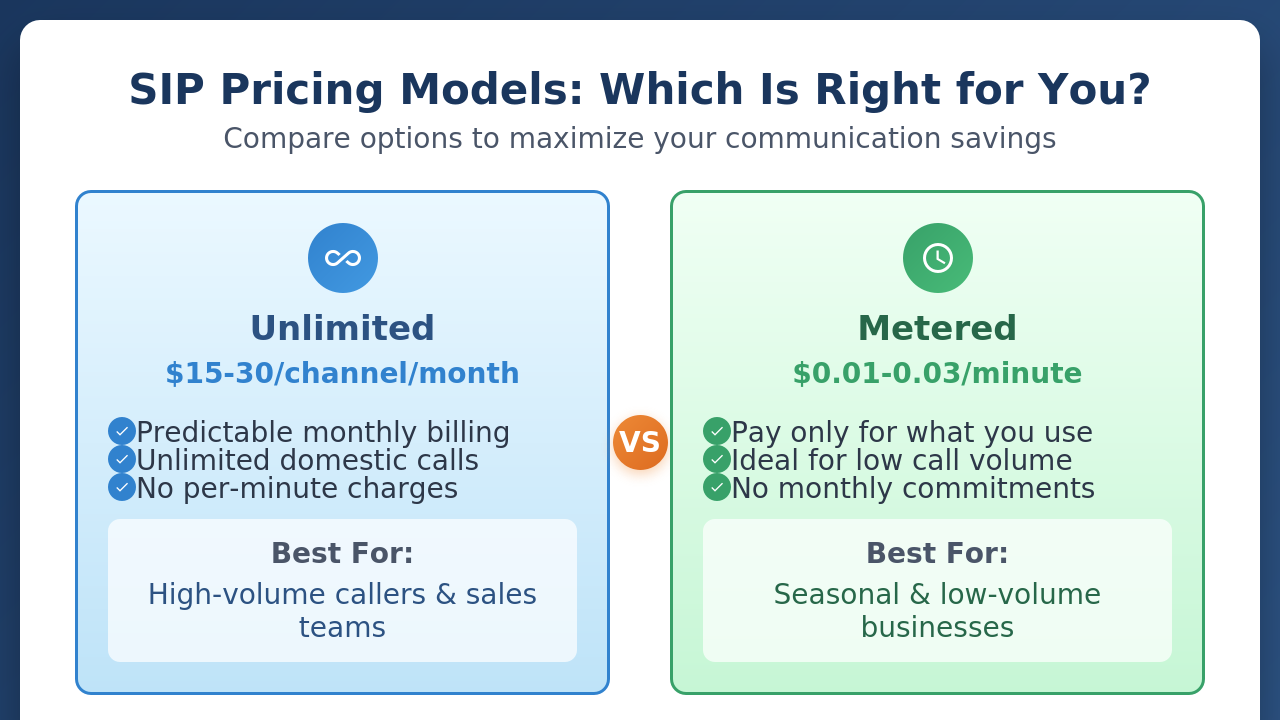
Under this model, businesses pay a fixed monthly rate per channel for unlimited domestic calling. Typical rates range from $20 to $30 per channel monthly, with the exact price depending on the provider and included features. This approach works well for businesses with consistent, moderate-to-high call volumes where predictable budgeting matters more than minimizing costs during slow periods.
A small professional services firm with five employees might need three channels to handle typical concurrent call volume. At $20 per channel, monthly SIP costs total $60 for unlimited calling, a fraction of what traditional business lines with comparable capability would cost. The simplicity of knowing exactly what phone service will cost each month helps with financial planning and eliminates surprise bills.
Metered Pay-As-You-Go Plans
Metered pricing charges per minute of actual usage, typically ranging from $0.01 to $0.03 for domestic calls. This model suits businesses with low or highly variable call volumes. Seasonal operations, companies where communication happens primarily through email, or businesses just starting out can benefit from paying only for actual usage.
The trade-off involves less predictable monthly expenses and potential cost increases during busy periods. However, for businesses averaging fewer than a few hundred minutes monthly, metered pricing often delivers the lowest total cost. Comparing SIP trunk providers across both pricing models helps identify the best fit for your specific usage patterns.
Can Affordable Business Phone Systems Scale with Your Growth?
Growth creates communication challenges that traditional phone systems handle poorly. Adding employees means adding phone capacity, which under legacy infrastructure requires coordinating installations, purchasing additional hardware, and committing to expanded service contracts.
SIP trunking treats scalability as a built-in feature rather than an expensive upgrade path. When your business adds staff or experiences increased call volume, provisioning additional channels happens through your provider’s control panel. There’s no waiting for technician visits or approving capital expenditure requests.
This flexibility extends in both directions. Businesses experiencing seasonal fluctuations can increase capacity during peak periods and reduce it during slower months. A landscaping company might need additional channels during spring and summer when customer calls spike, then scale back during winter. Traditional phone systems would require maintaining year-round capacity for peak demand; SIP trunking allows cost alignment with actual business cycles.
The scalability advantage is relevant for growing businesses that are uncertain about future communication needs. Rather than over-provisioning expensive capacity to accommodate possible growth, companies can start with minimum requirements and expand as actual demand materializes.
Business VoIP phone system enabling seamless scalability as small business grows.
Real-World Cost Savings Scenarios
Consider how different small business profiles might benefit from transitioning to SIP trunking.
Scenario One: Professional Services Firm – A 15-person accounting firm currently pays $450 monthly for traditional phone service, including four business lines and long-distance charges. Transitioning to SIP trunking with five channels at $20 each could reduce monthly costs to approximately $100 for the service plus minimal DID (phone number) fees. Potential annual savings could exceed $4,000 while gaining features like call data records and easy scalability during tax season.
Scenario Two: Retail Business with Multiple Locations – A regional retailer with three locations maintains separate phone systems at each site, totaling over $600 monthly across locations. Consolidating to a single SIP trunk provider with eight total channels might cost $160 monthly. The business could save over $5,000 annually while gaining centralized management and consistent features across all locations.
Scenario Three: Home Services Company – A plumbing company with four office staff members handles high call volume during business hours. Current traditional service with six lines and significant long-distance calling to surrounding counties costs $380 monthly. Switching to unlimited SIP trunking with six channels at $25 each would total $150 monthly. Potential annual savings approach $2,800, and the business gains advanced features like call routing and failover protection.
These scenarios illustrate how savings can scale across different business types and sizes. The common thread involves eliminating wasted capacity, removing per-minute long-distance charges, and reducing infrastructure complexity.
Frequently Asked Questions
How many SIP channels does a small business typically need? Most businesses need one channel for every three to four employees, since not everyone uses the phone simultaneously. A 12-person office might need three to four channels for normal operations. Businesses with higher call volumes, like sales teams or customer service departments, may need higher ratios.
Will switching to SIP trunking affect my call quality? Modern SIP trunking delivers call quality equal to or better than traditional phone lines with adequate internet bandwidth. Most business broadband connections easily support multiple simultaneous calls. Each call requires approximately 85–100 Kbps of bandwidth, well within typical business internet speeds.
Can I keep my existing business phone numbers? Yes. Number porting allows you to transfer existing phone numbers to your new SIP provider. The process typically takes one to two weeks, and service continues uninterrupted throughout the transition. Your customers, partners, and marketing materials continue working without changes.
What happens to my phone system during an internet outage? Quality SIP trunk providers include failover options that route calls to backup numbers during outages. Calls can automatically forward to mobile phones or alternate locations, ensuring you never miss important customer calls even if your primary internet connection experiences problems.
Take Control of Your Communication Budget
Small business owners face enough financial pressures without overpaying for phone service. The shift toward internet-based calling has matured to the point where reliability matches or exceeds traditional systems while costs drop dramatically. Businesses clinging to legacy infrastructure pay a premium for capabilities that SIP trunking delivers at a fraction of the price.
The transition process takes far less time than most business owners expect. Quality SIP trunk providers offer free trials, instant provisioning, and straightforward configuration that works with existing IP-enabled equipment. There’s no need to replace phones or disrupt operations during the switch.
SIP.US delivers the reliability, transparent SIP pricing, and self-service control that small businesses need from their communication provider. With no contracts, instant setup, and unlimited calling options, you can start reducing phone costs immediately. Get started with SIP.US and see why thousands of businesses have made the switch.

Mitch leads the Sales team at BCM One, overseeing revenue growth through cloud voice services across brands like SIPTRUNK, SIP.US, and Flowroute. With a focus on partner enablement and customer success, he helps businesses identify the right communication solutions within BCM One’s extensive portfolio. Mitch brings years of experience in channel sales and cloud-based telecom to every conversation.
Free SIP Trunk in 60 Seconds
Related Posts

What Is a DID Number? Direct Inward Dialing Explained
Unlock the potential of your communication system with our Beginner’s Guide to DID Numbers and SIP Trunks, offering cost-effective, scalable solutions for modern businesses and individuals.

What Is SIP? A Complete Guide to Session Initiation Protocol
Discover everything about SIP and how it revolutionizes communication. Learn what is SIP, its benefits, and how to implement it in your business for better connectivity.

What Is Internet Protocol? IP Definition and How It Works
Internet protocol is the addressing and routing system that gets every business call, email, and…